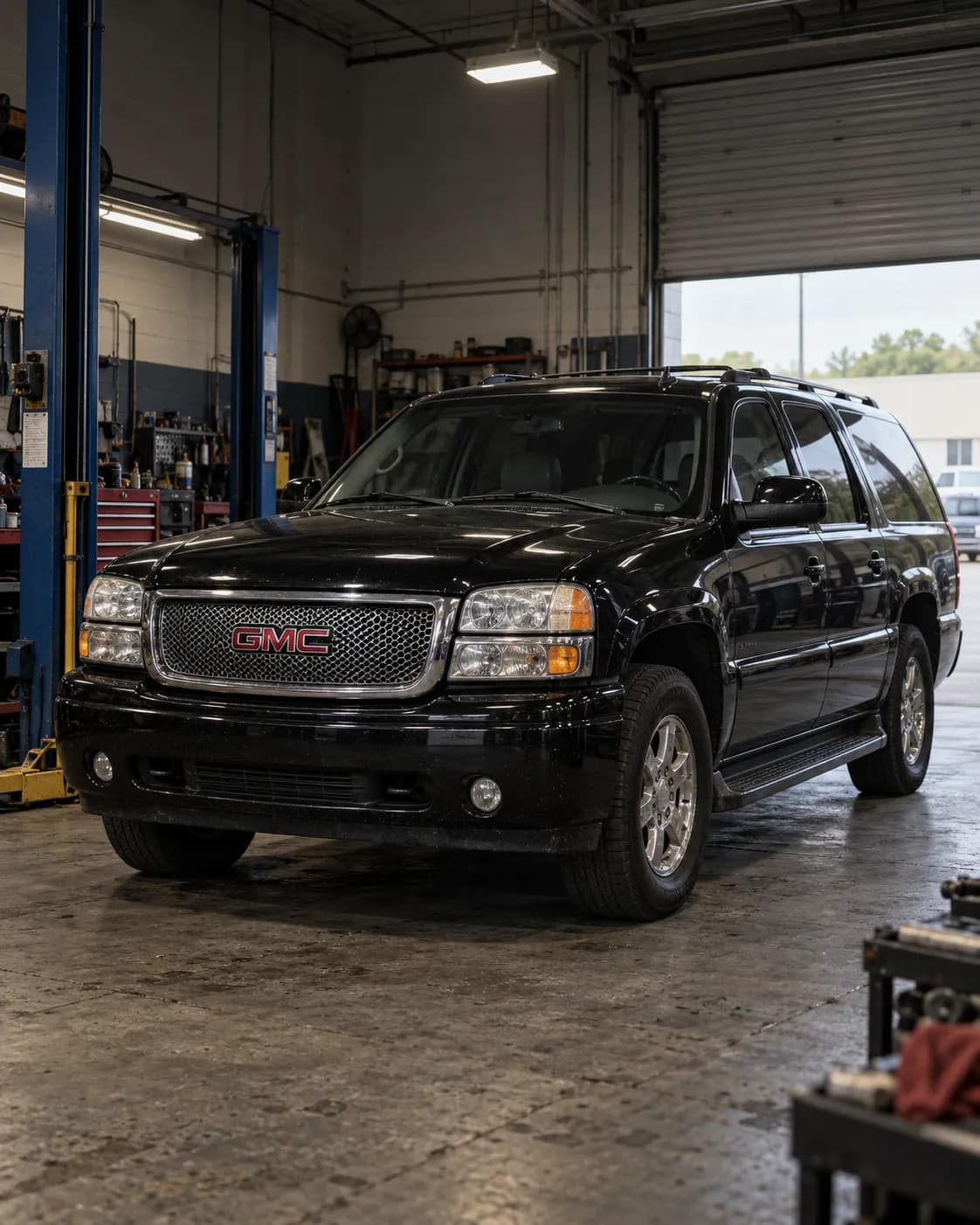
Source reference 10113494
Manufacturer communication — 2006 GMC YUKON DENALI XL
Relation to the target vehicle
- The source's vehicle field includes the trim.
- Model year
- Match 2006 — Source vehicle field
- Model
- Match YUKON DENALI XL — Source vehicle field
- Trim
- Match Denali — Source vehicle field
What the manufacturer’s document says
06-06-01-010B ・ information ・ for GM vehicles in general
Applies to
Applies to 2004-2014 GM cars and trucks with close-coupled catalytic converters.
the passage
Models: 2004-2014 GM Cars and Trucks with Close-Coupled Catalytic Converters
Finding the cause
Possible causes
If the engine breaks down (for example a broken intake/exhaust valve or piston), debris may be deposited in the converter through the exhaust ports.
the passage
If an engine breakdown or non-function were to occur (such as broken intake/exhaust valve or piston), debris may be deposited in the converter through engine exhaust ports.
After a severe overheat the ceramic brick inside the converter may be damaged, and ceramic debris may be drawn into the engine through the cylinder head exhaust ports.
the passage
If the engine is non-functioning due to a severe overheat event, damage to the ceramic “brick” internal to the catalytic converter may occur. This may result in ceramic debris being drawn into the engine through the cylinder head exhaust ports.
Steps to confirm (in the document’s order)
When replacing an engine for a breakdown, inspect the catalytic converters and all transferred components such as the exhaust and intake manifolds.
the passage
When replacing an engine for a breakdown or non-function, an inspection of the catalytic converters and ALL transferred components (such as exhaust/intake manifolds) should be performed.
Correction
Repair
Remove any debris that is found.
the passage
Any debris found should be removed.
After an engine failure from severe overheat, inspect each catalytic converter for melting or cracking of the ceramic brick and replace the converter if damage is seen.
the passage
In cases of engine failure due to severe overheat, dealers should also inspect each catalytic converter for signs of melting or cracking of the ceramic “brick.” If damage is observed, the converter should be replaced.
Caution
A replacement engine installed in either case may fail from debris entering the combustion chambers when it is started.
the passage
If a replacement engine is installed in either of these instances, the replacement engine may fail due to the debris being introduced into the combustion chambers when started.
Compiled by reading the full text of the document; each point stands on the passage shown. Check the document itself, linked below, before working on a vehicle.
Stated content
Communication summary
本情報通知は、密結合型コンバーターおよびエンジン交換に関する情報を提供するものです。 Machine translation (unreviewed)
This informational bulletin provides information on close-coupled converter and engine replacement.
Go to this passage in the original
Source
- Source
- NHTSA Manufacturer Communications
- Source reference
- 10113494
- Received by source
- 2017-08-15
- Incident date
- Unknown
Open original text and sourceOpen the provider's page (external)