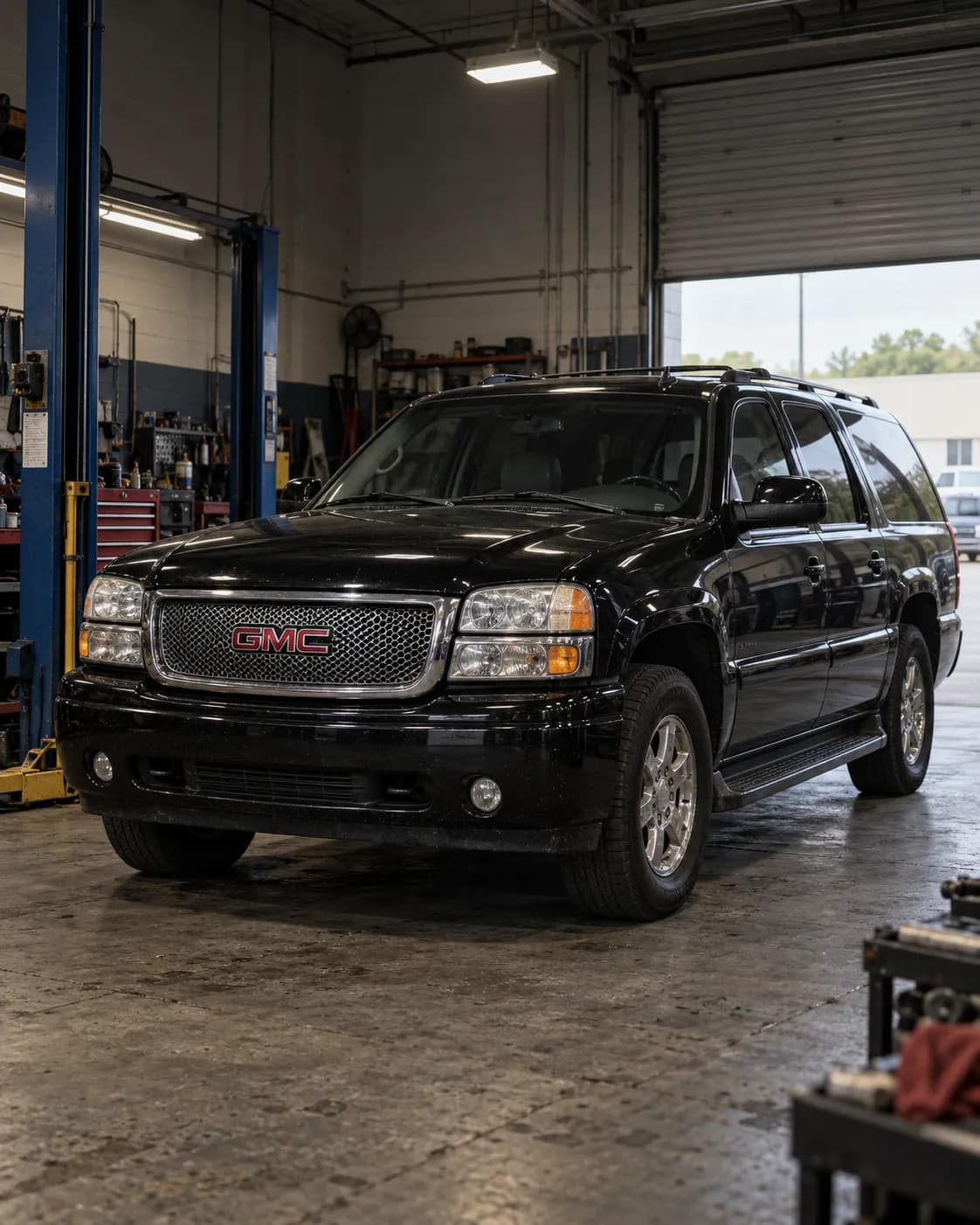
Source reference 10116890
Manufacturer communication — 2006 GMC YUKON DENALI XL
Relation to the target vehicle
- The source's vehicle field includes the trim.
- Model year
- Match 2006 — Source vehicle field
- Model
- Match YUKON DENALI XL — Source vehicle field
- Trim
- Match Denali — Source vehicle field
What the manufacturer’s document says
02-08-42-001I ・ information ・ for GM vehicles in general
Applies to
2017 and prior GM passenger cars and trucks.
the passage
2017 and Prior GM Passenger Cars and Trucks
Fault
The bulletin helps identify lamp conditions that are not considered warrantable.
the passage
This bulletin is being published to assist with the identification of issues that are not considered warrantable.
Finding the cause
Possible causes
A variety of chemicals can cause crazing or cracking of the polycarbonate lens.
the passage
A variety of chemicals can cause crazing or cracking of the polycarbonate lens.
Rubbing compound, grease/tar/oil removers, tire cleaners, prep solvents for pin striping, cleaner/waxes, undiluted washer solvent, alcohol and even car wash soap in too high a concentration may damage the lens.
the passage
Also rubbing compound, grease/tar/oil removers, tire cleaners, prep solvents for pin stripping, cleaner/waxes, undiluted washer solvent, alcohol and even car wash soaps in too high a concentration may also damage the lens.
Non-OE lamp assemblies most often come in for holding moisture or for inoperative bulbs due to corroded electrical connections.
the passage
These lamps are most often presented by customers as holding moisture or for inoperative bulbs due to corroded electrical connections.
Bulbs with higher output than original run hotter, and the excessive heat can melt the socket, housing or lens.
the passage
Because the bulb output is higher, the operating temperature is also higher. This excessive heat can melt the socket, housing, or lens.
Steps to confirm (in the document’s order)
Broken mounting tabs, rear housing fractures and loose components inside the lamp assembly are evidence of impact damage.
the passage
Broken mounting tabs, rear housing fractures, and loose components inside the lamp assembly are evidence if impact damage.
The most reliable way to identify a non-OE part is to compare it with the replacement service part or a like vehicle.
the passage
The most reliable way to identify a non OE part is to compare it to the replacement service part or a like vehicle.
If in doubt, the bulb number should match the GM service part.
the passage
If in doubt, the bulb number should match the GM service part.
Correction
Repair
When servicing any exterior lighting assembly, transfer any electrical connection seals to the new part; without them the connection may corrode from water entry.
the passage
When servicing any exterior lighting assembly, be sure to transfer any electrical connection seals to the new part. They are often on the body side of the harness connection, but may have stayed on the part being replaced. If not transferred to the new part, the connection may corrode due to water entry.
Caution
Clean exterior lamps and lenses only with lukewarm or cold water, a soft cloth and a car washing soap.
the passage
Use only lukewarm or cold water, a soft cloth and a car washing soap to clean exterior lamps and lenses.
Crazing or deformation of the lens may occur if a shop mat or fender cover covers part or all of the headlamp while the DRL or headlamps are on.
the passage
Crazing or deformations of the lens may occur if a shop mat or fender cover is draped over the fender and covers a portion or all of the headlamp assembly while the DRL or headlamps are on.
Compiled by reading the full text of the document; each point stands on the passage shown. Check the document itself, linked below, before working on a vehicle.
Stated content
Communication summary
本情報通知はヘッドランプ、テールランプ、ライセンスランプまたはフォグ/ドライビングランプの損傷の概要を示し、保証交換として考慮すべきことと考慮しないことについて説明するものである Machine translation (unreviewed)
This informational bulletin provides an out line on Headlamp, Tail Lamp, License Lamp or Fog/Driving Lamp Damage and what should be considered warranty replacement and not
Go to this passage in the original
Source
- Source
- NHTSA Manufacturer Communications
- Source reference
- 10116890
- Received by source
- 2017-08-31
- Incident date
- Unknown
Open original text and sourceOpen the provider's page (external)