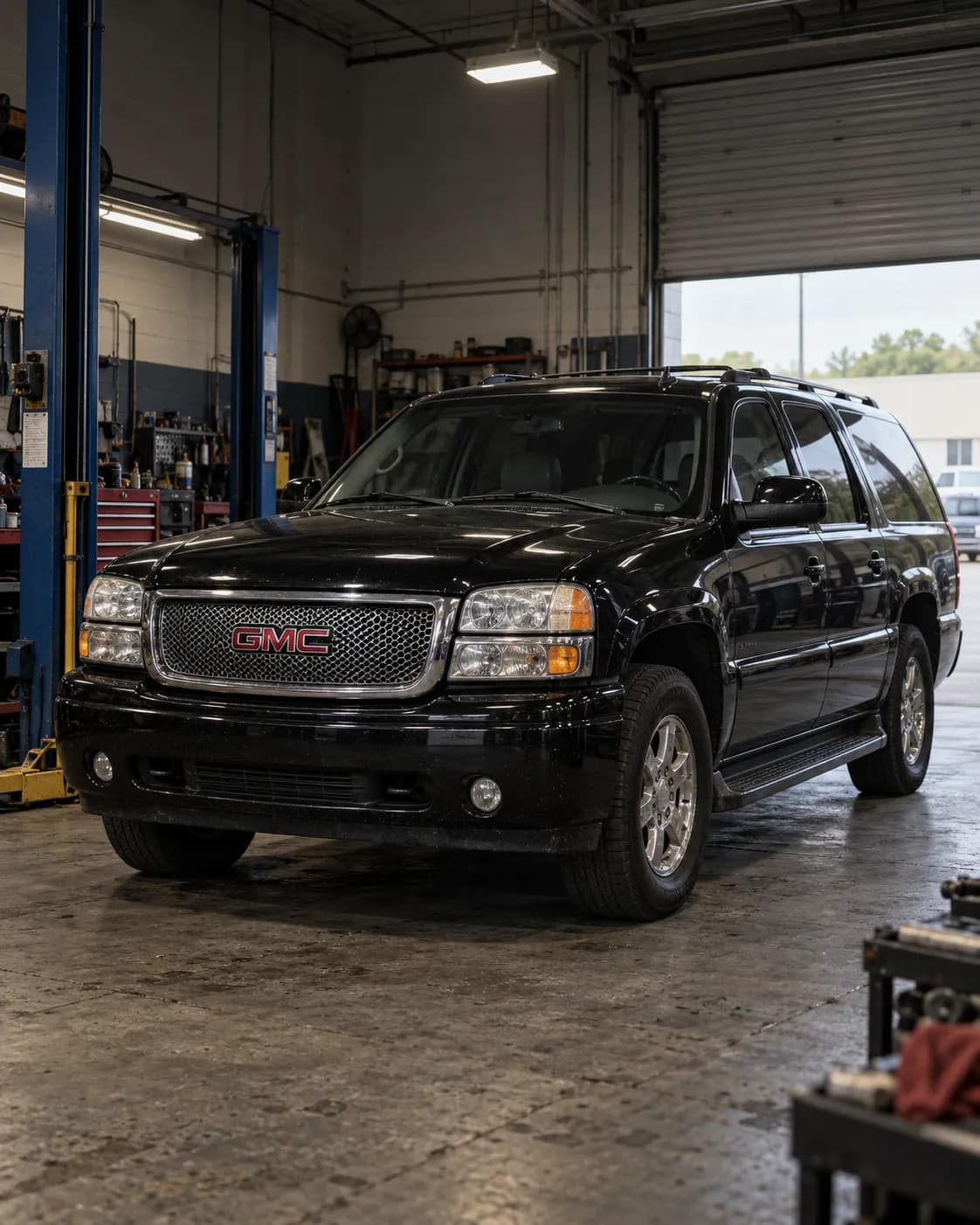
Source reference 10138213
Manufacturer communication — 2006 GMC YUKON XL
Relation to the target vehicle
- The trim (Denali) is not stated.
- Model year
- Match 2006 — Source vehicle field
- Model
- Match YUKON XL — Source vehicle field
- Trim
- Unknown
What the manufacturer’s document says
12-03-10-002 ・ fault and correction ・ for GM vehicles in general
Applies to
Applies to 2006-2013 GM passenger cars and light duty trucks.
the passage
2006-2013 GM Passenger Cars and Light Duty Trucks
Fault
Vibration in the steering wheel or seat centered at 10-14 Hz, between 93-115 km/h (58-72 mph).
the passage
Some customer may report vibration in the steering wheel or the seat centered at a frequency of 10-14 Hz, between 93-115 km/h (58-72 mph).
Finding the cause
Possible causes
Wrong wheel torque methods can mount the wheel and tire assembly off center, so its mass "orbits" the hub axis and vibrates like a tire with high RFV or an imbalance.
the passage
Inappropriate wheel torque methods may cause the wheel and tire assembly to be offset when mounting. This offset causes the mass of the tire and wheel to "orbit" the axis of the hub and creates vibration similar to a tire with high RFV or a tire with an imbalance.
Correction
Repair
Remove the tire and wheel assemblies, index them at least two stud positions from where they were, and reinstall them.
the passage
Remove the tire and wheel assemblies from the vehicle. Index them at least two stud positions from the previous position and re-install them.
With the wheel off the ground, install all lug nuts hand tight using only a socket.
the passage
With the wheel off of the ground, install all lug nuts hand tight using only a socket.
Snug all lug nuts in a star or criss-cross pattern with a hand wrench.
the passage
Snug all lug nuts using a star or "criss-cross" pattern using a hand wrench.
Lower the vehicle until the tire has just enough contact to resist turning, then torque to specification with a torque wrench.
the passage
Lower the vehicle until there is just enough contact to provide resistance to complete torquing to specification with a torque wrench.
Caution
This first order tire/wheel vibration may be misdiagnosed as wheel imbalance or excessive tire radial force variation.
the passage
First order tire/wheel vibration may be misdiagnosed as tire/wheel assembly imbalance or excessive tire Radial Force Variation.
Improper torque may also distort the brake rotor.
the passage
Notice: Improper torque may cause distortion of the brake rotor, and may result in variance in wheel mounting that can cause smooth road shake vibration.
Do not use torque sticks or an impact driver to tighten wheel lug nuts.
the passage
Important: Do not use torque sticks or an impact driver to tighten wheel lug nuts.
Compiled by reading the full text of the document; each point stands on the passage shown. Check the document itself, linked below, before working on a vehicle.
Stated content
Communication summary
本技術情報は、車両への車輪取り付けの正しい方法と正しいトルク管理技術についての説明を提供しています Machine translation (unreviewed)
This informational bulletin provides a description of the proper wheel installation and proper wheel torque techniques used to install wheels onto vehicles
Go to this passage in the original
Source
- Source
- NHTSA Manufacturer Communications
- Source reference
- 10138213
- Received by source
- 2018-05-21
- Incident date
- Unknown
Open original text and sourceOpen the provider's page (external)