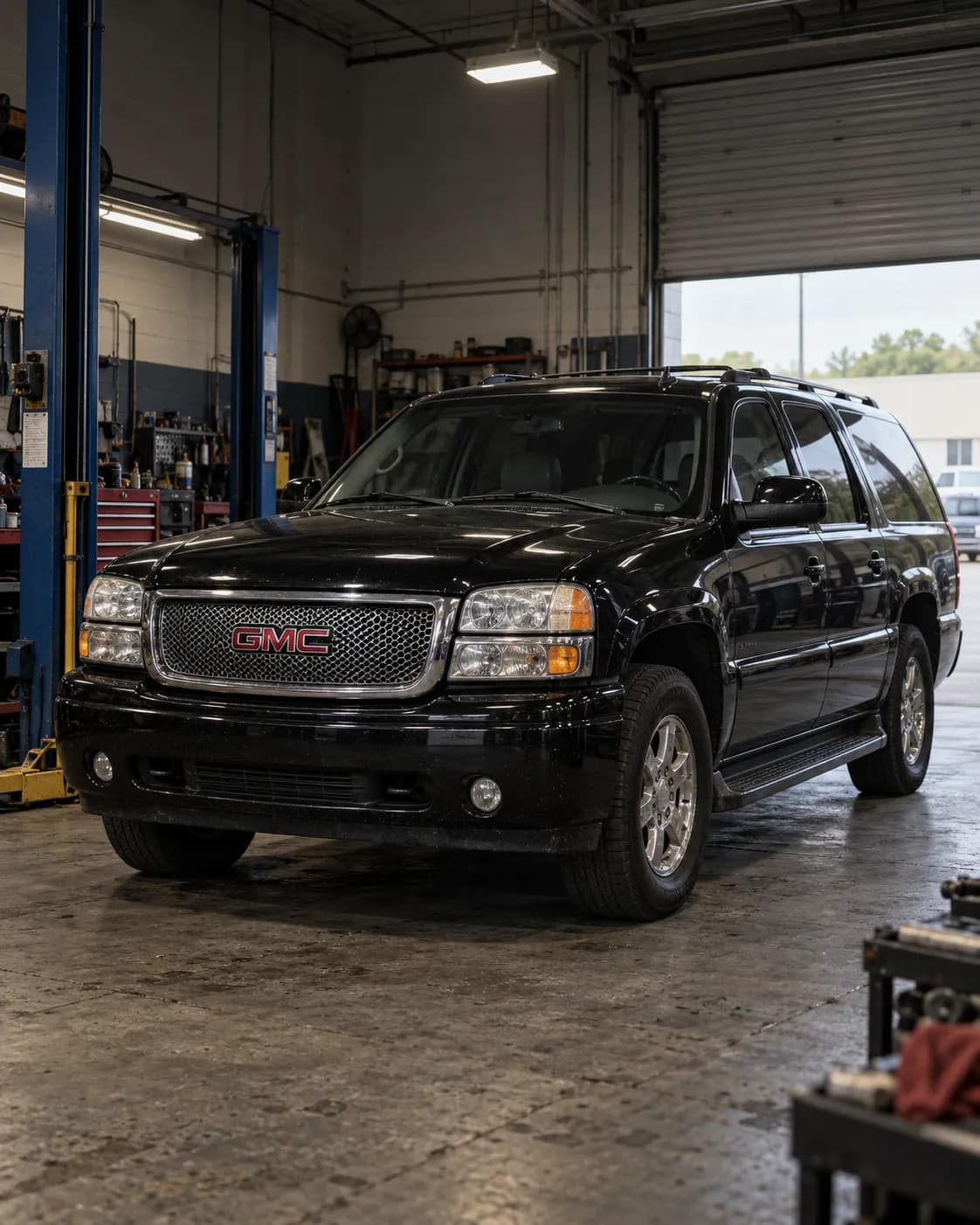
Source reference 10166659
Manufacturer communication — 2006 GMC YUKON DENALI XL
Relation to the target vehicle
- The source's vehicle field includes the trim.
- Model year
- Match 2006 — Source vehicle field
- Model
- Match YUKON DENALI XL — Source vehicle field
- Trim
- Match Denali — Source vehicle field
What the manufacturer’s document says
19-NA-219 ・ fault and correction ・ for GM vehicles in general
Applies to
GM passenger cars and trucks with V8 engines, model years 2002 to 2018.
the passage
GM Passenger Cars and Trucks 2002 2018 All All V8 All
Fault
Misfire, chirp, squeak, squeal or tick noise, with the MIL illuminated and DTC P0300, P0301, P0302, P0303, P0304, P0305, P0306, P0307 and/or P0308 set.
the passage
Diagnostic Tip for Misfire, Chirp, Squeak, Squeal or Tick Noise, Malfunction Indicator Lamp (MIL) Illuminated - DTC P0300, P0301, P0302, P0303, P0304, P0305, P0306, P0307 and/or P0308 Set
Finding the cause
Possible causes
A worn cam lobe on this engine family generally creates a consistent chirp, squeak, squeal or tick at camshaft speed and/or a misfire with a P0300-P0308 DTC.
the passage
Generally, a worn cam lobe on this engine family will create a consistent chirp, squeak, squeal or tick noise at camshaft speed and/or a misfire with a P0300-P0308 DTC.
Steps to confirm (in the document’s order)
A verified noise is not eliminated by canceling fuel injectors and occurs at camshaft speed (half of crankshaft speed).
the passage
If a noise is verified, it will not be eliminated by canceling fuel injectors and the noise will occur at camshaft speed (half of crankshaft speed).
If applying pressure to the valve side of a rocker changes the noise, a lifter and/or cam lobe concern on that cylinder is most likely.
the passage
If the noise is changed by applying pressure to the valve side of the rocker, this is most likely the result of a lifter and/or cam lobe concern on that cylinder.
Measure cam lobe lift at the push rod side of the rocker arm; it differs from the SI specification but should be similar to the other rockers on the same bank.
the passage
Measure the cam lobe lift at the push rod side of the rocker arm. The lift in this location will differ from the SI specification but it should be similar as compared with other rockers on the same bank.
A bore scope or pen light helps when inspecting the cam lobes through the lifter bores; a damaged lobe is easy to overlook.
the passage
It is very easy to overlook a damaged cam lobe when inspecting them through the lifter bores and just because the lifter rollers are not worn, does not mean that the related cam lobes are okay. Both pieces need to be carefully inspected. It may help to use a bore scope or pen light when inspecting the cam lobes through the lifter bores.
A good indicator of a sticking valve is that misfires continue to count on an aggressive deceleration with engine braking.
the passage
A good indicator of a sticking valve is if engine misfires continue to count on an aggressive deceleration with engine braking.
Valve leakage is typically isolated by the Cylinder Leakage Test in SI, which finds excessive leakage past an intake or exhaust valve compared with the others.
the passage
Typically, the Cylinder Leakage Test outlined in SI should isolate valve leakage by finding excessive leakage past an intake or exhaust valve, as compared with others.
The two pieces of a broken valve spring may stay stacked together and be hard to see; lightly pushing on different places on the springs with a small hammer handle may help.
the passage
Sometimes, the two broken pieces of the spring will remain stacked together making it hard to detect when visually inspecting them. As a result, it may help to lightly push on different places on the springs with a small hammer handle.
Correction
Repair
If a worn camshaft lobe or lifter roller is found, replace the camshaft and all lifters following SI procedures.
the passage
Follow SI procedures to replace the camshaft and all lifters if a worn camshaft lobe or lifter roller is found.
If force is needed to tap the valve off its seat, excessive carbon build up exists, which may be repaired by decarbonizing the engine.
the passage
If you have to use force to tap the valve off of the seat, excessive carbon build up exists, which may be repaired by decarbonizing the engine.
Compiled by reading the full text of the document; each point stands on the passage shown. Check the document itself, linked below, before working on a vehicle.
Stated content
Communication summary
本診断情報は、バルブ、ラッシュアジャスター、またはカムシャフトの不具合の診断方法に関する追加情報を提供するものである。 Machine translation (unreviewed)
This diagnostic tip provides additional information on how to diagnose a possible valve, lifter or camshaft issue.
Go to this passage in the original
Source
- Source
- NHTSA Manufacturer Communications
- Source reference
- 10166659
- Received by source
- 2019-10-28
- Incident date
- Unknown
Open original text and sourceOpen the provider's page (external)