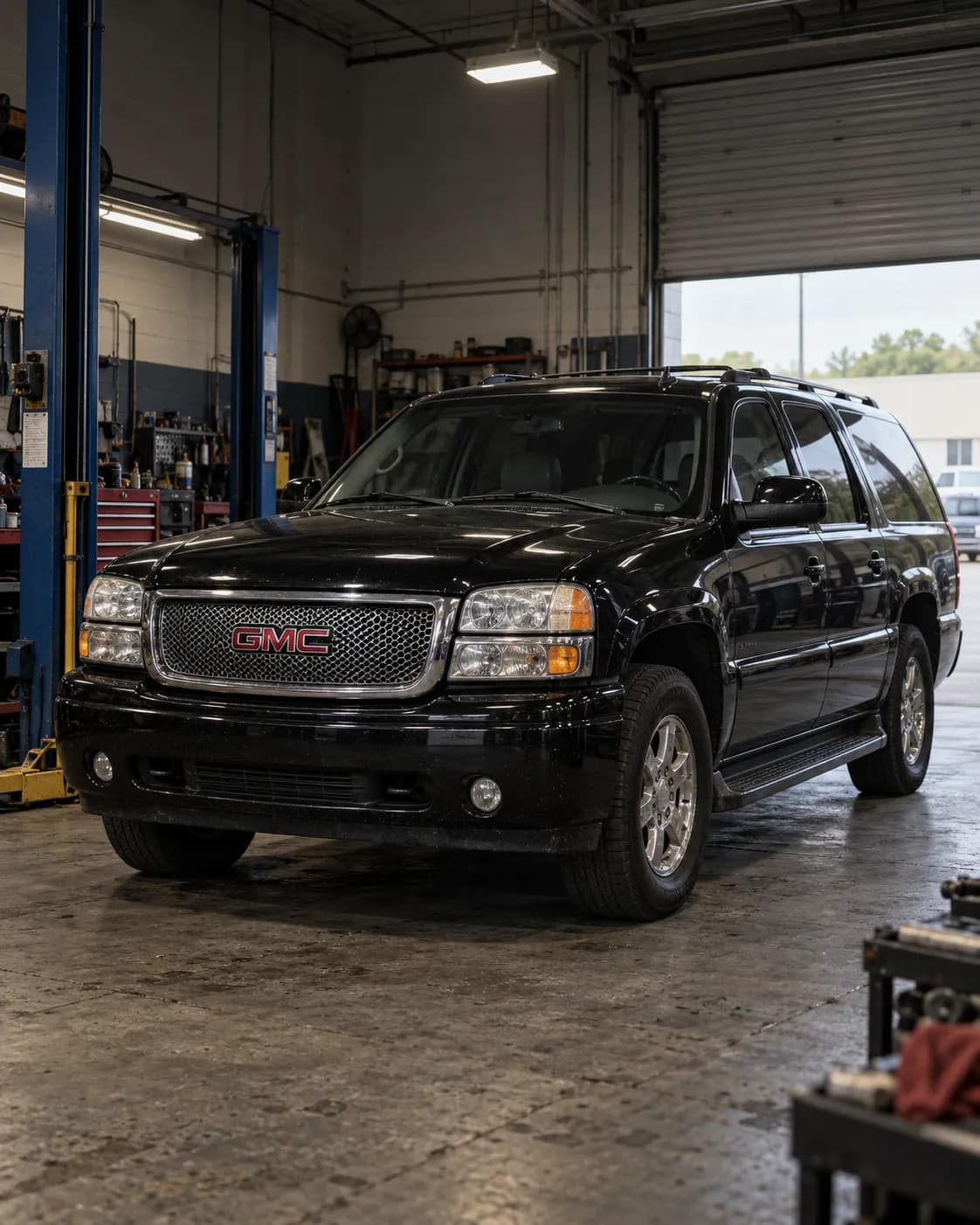
Source reference 11004761
Manufacturer communication — 2006 GMC YUKON DENALI XL
Relation to the target vehicle
- The source's vehicle field includes the trim.
- Model year
- Match 2006 — Source vehicle field
- Model
- Match YUKON DENALI XL — Source vehicle field
- Trim
- Match Denali — Source vehicle field
What the manufacturer’s document says
16-NA-383 ・ fault and correction ・ for GM vehicles in general
Applies to
Applies to GM passenger cars and trucks with gasoline engines only, model years 2000 to 2025.
the passage
Light/Medium Duty Trucks (including LCF MD) 2000 2025 — — Gasoline Engines Only
Fault
Rough idle, crank no start, extended crank or misfire, with the engine warning lamp on and DTC P0300, P0301, P0302, P0303, P0304, P0305, P0306, P0307 or P0308 set.
the passage
Information on Rough Idle, Crank No Start, Extended Crank or Misfire Due to Excessive Carbon on Top of Valves or Sticking Valves, Malfunction Indicator Light (MIL) Illuminated - DTC P0300, P0301, P0302, P0303, P0304, P0305, P0306, P0307, P0308 Set
When the engine is cold, compression on multiple cylinders may be zero.
the passage
When the engine is cold, the compression on multiple cylinders may be at 0 kPa (0 psi).
The engine may pop through the intake or exhaust while cranking, and the spark plugs may be fuel fouled.
the passage
The engine also may pop through the intake or exhaust while cranking and the spark plugs may be fuel-fouled when inspected.
Finding the cause
Possible causes
Major carbon build-up on the intake and/or exhaust valves from fuel contamination or incomplete burning of the fuel; misfires should not appear before at least 8,000 km (5,000 mi).
the passage
This condition may be caused by major carbon build-up on the intake and/or exhaust valves due to fuel contamination or incomplete burning of the fuel as shown below, so the misfires should not have appeared until accumulating at least 8,000 km (5,000 mi)
Correction
Repair
If there is no valve damage and no cam follower out of place, perform the cleaning procedure to free sticking valves and remove carbon from the valves and pistons.
the passage
If there is no sign of valve damage or cam followers that are out of place, perform the following procedure to free up sticking valves and to remove carbon from the valves and pistons.
If valves are damaged or cam followers are out of place, make the engine mechanical repairs first and then perform the cleaning procedure to prevent a return.
the passage
If valve damage is present or if there are cam followers that are out of place, perform engine mechanical repairs as necessary to correct the concern and then perform the procedure below to prevent the concern from returning.
Fill Cleaner Kit J-35800-A with about 650 ml (22 oz, 2 cans) of Air Intake, Combustion Chamber Cleaner and set the air pressure at the tool to 260 kPa (40 psi).
the passage
Fill Cleaner Kit J-35800-A with Air Intake, Combustion Chamber Cleaner, approximately 650 ml (22 oz-2 cans), and close the cap of the tool tightly. Set the air pressure to 260 kPa (40 psi) at the service tool.
With GDS 2 or a scan tool, command engine idle to 2000 rpm so the engine does not stall.
the passage
Using GDS 2 or a Scan Tool, command engine idle to 2000 rpm to prevent the engine from stalling.
With the engine at operating temperature in a well-ventilated area, slowly and carefully induce the cleaner into the engine, taking about 3 minutes.
the passage
In a well-ventilated area with the engine at operating temperature, slowly/carefully induce the Top Engine Cleaner into the engine, which should take approximately 3 minutes.
Parts
The Top Engine Cleaning Kit (ACDelco Air Intake, Valve and Combustion Chamber Cleaner and ACDelco Fuel System Cleaner 44K) is 19435372 for the U.S. and Canada.
the passage
ACDelco Air Intake, Valve and Combustion Chamber Cleaner and ACDelco Fuel System Cleaner 44K (Top Engine Cleaning Kit) 19435372 (U.S. and Canada)
Part numbers printed in the document
19435372MAINTENANCE KIT,FUEL SYSTEM ACDELCO 3-11OZLook up at RockAuto (aftermarket candidates) ↗Search the web ↗
No successor statedas stated by GMPartsGiant (checked 2026-10-06) ↗
The numbers are as the document prints them. The name and the replacing number are what the pages of GMPartsGiant, a reseller of genuine parts and not GM, state. Aftermarket equivalents are not checked here (the links only search by number). Confirm the fit for the vehicle (VIN) before ordering.
Caution
Inducing too much cleaner at too low an RPM, or stalling the engine with too much cleaner at once, may hydro-lock the engine and bend a connecting rod.
the passage
If too much cleaner is induced at too low of an RPM, or if you force the engine to stall by inducing too much cleaner at once, the engine may hydro-lock and bend a connecting rod(s).
Compiled by reading the full text of the document; each point stands on the passage shown. Check the document itself, linked below, before working on a vehicle.
Stated content
Communication summary
本サービスブレティンは、インテークバルブの脱炭素処理に使用される新しい燃料インジェクションクリーナーキットについて通知するもので、アイドル不調、クランク不始動、クランク延長、またはミスファイア、MILおよびDTCsの状態を改善し、トップティア燃料の使用によってカーボンビルドアップを軽減する方法を説明しています。 Machine translation (unreviewed)
This service bulletin advises of a new fuel injection cleaner kit used for decarbonizing the intake valves to correct conditions of rough idle, Crank no start, extended crank or misfire, MIL with DTCs, and explains how Top Tier fuels should be used to reduce carbon build-up.
Go to this passage in the original
Source
- Source
- NHTSA Manufacturer Communications
- Source reference
- 11004761
- Received by source
- 2024-07-16
- Incident date
- Unknown
Open original text and sourceOpen the provider's page (external)