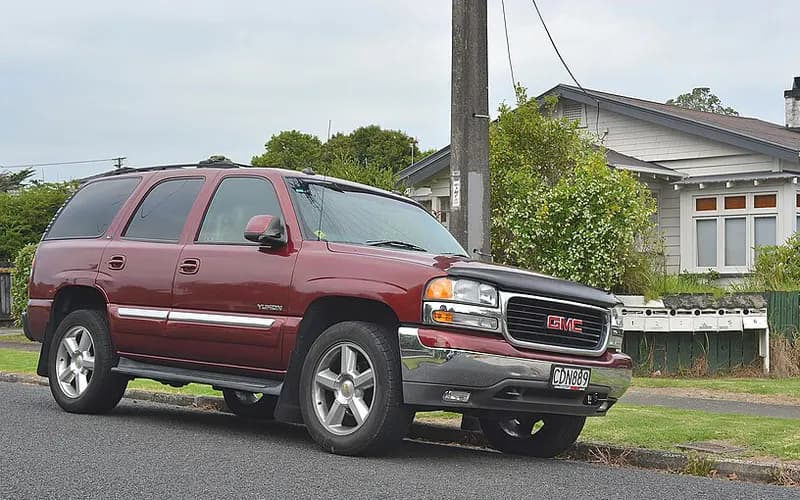
EngineModel years 1999–2006Manufacturer
Engine knock on cold start (carbon on piston)
4.8L, 5.3L, 6.0L or 6.2L gas engine; 1999-2006 Chevrolet and GMC C/K pickup and utility models
FaultCrate・Engine knock on cold start (carbon on piston)
The noise is usually more noticeable on initial start-up below 10°C (50°F) and may be more pronounced on the first cold start after a long trip.
The noise may be caused by an interaction between carbon formed on the piston, the piston motion and the cylinder wall.
What to do
No technical document states a check or a repair.
What is needed
- Parts and materials
- Not stated
- Labor time
- Not stated
- Special tools
- Not stated
- Scan tool
- Not stated
Only what the technical documents state. "Not stated" does not mean not needed.
If left
- GM Powertrain Engineering confirmed the noise is not detrimental to the performance, reliability or durability of the engine.
- The noise has no effect on the longevity of any engine component.
Caution
- Replacing the engine assembly or pistons to repair this condition is not recommended.
Applies to
- The bulletin covers 1999-2006 Chevrolet and GMC C/K pickup and utility models.
- It applies to the 4.8L, 5.3L, 6.0L or 6.2L gas engine.
See the evidence (1 documents, 7 passages)
| Document | Publisher | Date |
|---|---|---|
| [1]01-06-01-028C: Engine Knock on Cold Start ↗ | ManufacturerGeneral Motors (filed with NHTSA) | 2016-04-01 |
Applies toThe bulletin covers 1999-2006 Chevrolet and GMC C/K pickup and utility models.
1999-2006 Chevrolet and GMC C/K Pickup and Utility Models— [1] Models
Applies toIt applies to the 4.8L, 5.3L, 6.0L or 6.2L gas engine.
Equipped with 4.8L, 5.3L, 6.0L or 6.2L Gas Engine— [1] Models
First signsThe noise is usually more noticeable on initial start-up below 10°C (50°F) and may be more pronounced on the first cold start after a long trip.
The noise is usually more noticeable on the initial start-up when the temperature is below 10°C (50°F) and may be more pronounced on the first cold start following a long trip.— [1]
Why it happensThe noise may be caused by an interaction between carbon formed on the piston, the piston motion and the cylinder wall.
This noise may be caused by an interaction between carbon that has formed on the piston, the piston motion and the cylinder wall.— [1]
What it does not lead toGM Powertrain Engineering confirmed the noise is not detrimental to the performance, reliability or durability of the engine.
GM Powertrain Engineering, and an analysis of engines with this condition, has confirmed that the noise is not detrimental to the performance, reliability or durability of the engine.— [1]
What it does not lead toThe noise has no effect on the longevity of any engine component.
THIS NOISE DOES NOT HAVE ANY EFFECT ON THE LONGEVITY OF ANY OF THE ENGINE COMPONENTS.— [1]
CautionReplacing the engine assembly or pistons to repair this condition is not recommended.
At this time, attempts to repair this condition by replacing the engine assembly or pistons are not recommended.— [1]
Put together by FaultCrate from public records and technical documents. The cause and the repair are for the workshop to decide with the vehicle in front of it. Counts are records, not failure rates.
Records under this issue 0
No record matches