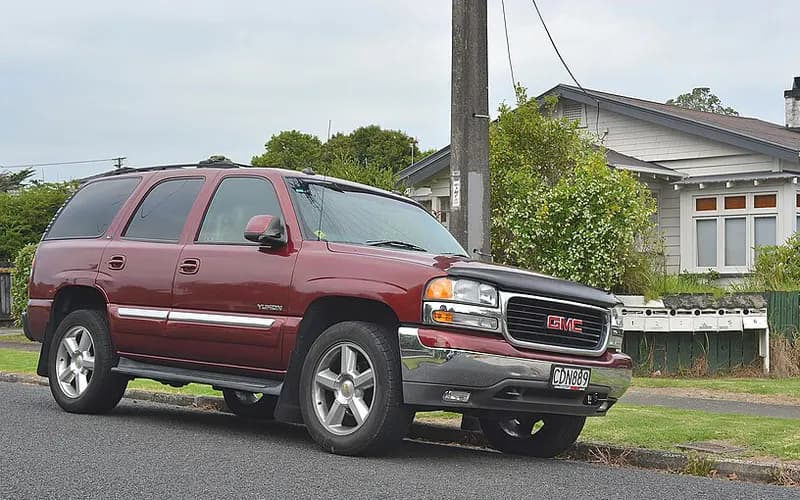
Fuel systemModel years 2004–2006ManufacturerGovernment
Engine fuel rail pulse damper retainer clip may fracture (8.1L V8) - recall 06V-289 / Transport Canada 2006195
Certain trucks with an 8.1L V8 (RPO L8-VIN G) engine; the NHTSA record lists GMC Yukon XL 2004-2006 and the Transport Canada record Yukon XL 2006. Model years come from the NHTSA record's product list held in the database, not from the recall text.
FaultCrate・Engine fuel rail pulse damper retainer clip may fracture (8.1L V8) - recall 06V-289 / Transport Canada 2006195
The engine fuel rail pulse damper retainer clip may fracture, leaving the damper inadequately retained.
On certain vehicles, the engine fuel rail pulse damper retainer clip may fracture, resulting in inadequate retention of the damper.
Analysis showed some clips were not properly heat treated and were more susceptible to fracture.
What to do
- To inspect for leaks, turn the ignition ON with the engine OFF for 2 seconds, turn it OFF for 10 seconds, turn it ON with the engine OFF, and inspect the fuel rail, fuel rail dampener, and fuel rail pressure cap and valve for fuel leaks.
- Dealers replace the engine fuel rail pulse damper retainer clip.
- Dealers replace the engine fuel rail pulse damper retainer clip.
- Part: 12575017 Clamp-Fuel Pulse Dpnr, quantity 1 per vehicle.
- Connect the J 34730-1A fuel pressure gage to the fuel pressure valve, wrapping a shop towel around the fitting while connecting it to avoid spillage.
- Install the bleed hose on J 34730-1A into an approved container.
- Open the valve on the J 34730-1A to bleed the system pressure; to help relieve residual pressure in the fuel rail, push down on the fuel rail dampener, which should move inward approximately 2-3 mm (1/8 in) as the pressure releases.
- Push down on the fuel dampener and remove the fuel pressure dampener clip; discard the old clip.
- Push down on the fuel dampener and install the new fuel pressure dampener clip.
- If a leak is present, a dampener kit with a new O-ring must be installed.
Part numbers printed in the document
The numbers are as the document prints them. The name and the replacing number are what the pages of GMPartsGiant, a reseller of genuine parts and not GM, state. Aftermarket equivalents are not checked here (the links only search by number). Confirm the fit for the vehicle (VIN) before ordering.
If left
- If the damper comes loose, a fuel leak may result.→ fuel leak
- Fuel leakage in the presence of an ignition source could result in a fire.→ fire
Caution
- The service procedure in this recall is different from the service procedure in the service manual.
- If the fuel pressure is not relieved as instructed in step 8, or the dampener is not held in position while the clip is replaced, the dampener O-ring may not seat or seal properly, and a damaged or improperly seated O-ring may result in a fuel leak.
- Do not remove the fuel dampener from the fuel rail; if it is removed, a fuel dampener kit with a new O-ring must be installed.
Applies to
- The recall concerns trucks with an 8.1L V8 (RPO L8-VIN G) engine.
See the evidence (3 documents, 19 passages)
| Document | Publisher | Date |
|---|---|---|
| [1]Recall 06V289000: ENGINE AND ENGINE COOLING ↗ | GovernmentNHTSA | 2006-08-03 |
| [2]Recall 2006195: Fuel System (engine fuel rail pulse damper retainer clip) | GovernmentTransport Canada | 2006-08-04 |
| [3]Recall 06V-289: documents filed with NHTSA ↗ | ManufacturerGeneral Motors (the documents of the recall as filed with NHTSA: defect notice, dealer bulletin) | — |
Applies toThe recall concerns trucks with an 8.1L V8 (RPO L8-VIN G) engine.
ON CERTAIN TRUCKS EQUIPPED WITH AN 8.1L V8 (RPO L8-VIN G) ENGINE— [1]
Why it happensThe engine fuel rail pulse damper retainer clip may fracture, leaving the damper inadequately retained.
THE ENGINE FUEL RAIL PULSE DAMPER RETAINER CLIP MAY FRACTURE RESULTING IN INADEQUATE RETENTION OF THE DAMPER.— [1]
If leftIf the damper comes loose, a fuel leak may result.
IF THE DAMPER COMES LOOSE, A FUEL LEAK MAY RESULT.— [1]
If leftFuel leakage in the presence of an ignition source could result in a fire.
FUEL LEAKAGE, IN THE PRESENCE OF AN IGNITION SOURCE, COULD RESULT IN A FIRE.— [1]
RepairDealers replace the engine fuel rail pulse damper retainer clip.
DEALERS WILL REPLACE THE ENGINE FUEL RAIL PULSE DAMPER RETAINER CLIP FREE OF CHARGE.— [1]
Why it happensOn certain vehicles, the engine fuel rail pulse damper retainer clip may fracture, resulting in inadequate retention of the damper.
On certain vehicles, the engine fuel rail pulse damper retainer clip may fracture, resulting in inadequate retention of the damper.— [2]
RepairDealers replace the engine fuel rail pulse damper retainer clip.
Correction: Dealers will replace the engine fuel rail pulse damper retainer clip.— [2]
Why it happensAnalysis showed some clips were not properly heat treated and were more susceptible to fracture.
Analysis showed some clips were not properly heat treated and were more susceptible to fracture.— [3]
RepairPart: 12575017 Clamp-Fuel Pulse Dpnr, quantity 1 per vehicle.
12575017 Clamp-Fuel Pulse Dpnr 1— [3]
CautionThe service procedure in this recall is different from the service procedure in the service manual.
The service procedure contained in this recall is different from the service procedure found in the appropriate service manual.— [3]
RepairConnect the J 34730-1A fuel pressure gage to the fuel pressure valve, wrapping a shop towel around the fitting while connecting it to avoid spillage.
Connect the J 34730-1A to the fuel pre ssure valve. Wrap a shop towel around the fitting while connecting the gage in order to avoid spillage.— [3]
RepairInstall the bleed hose on J 34730-1A into an approved container.
Install the bleed hose on J 34730-1A into an approved container.— [3]
RepairOpen the valve on the J 34730-1A to bleed the system pressure; to help relieve residual pressure in the fuel rail, push down on the fuel rail dampener, which should move inward approximately 2-3 mm (1/8 in) as the pressure releases.
Open the valve on the J 34730-1A in order to bleed the system pressure. To assist in relieving residual pressure in the fuel rail, push down on the fuel rail dampener. The dampener should move inward approximately 2-3 mm (1/8 in) as the pressure releases from the system.— [3]
CautionIf the fuel pressure is not relieved as instructed in step 8, or the dampener is not held in position while the clip is replaced, the dampener O-ring may not seat or seal properly, and a damaged or improperly seated O-ring may result in a fuel leak.
If the fuel pressure is not relieved as instructed in step 8, or the dampener is not held in position during the replacement of the dampener clip, the dampener O-ring may not seat or seal properly. A damaged or improperly seated O-ring may result in a fuel leak.— [3]
CautionDo not remove the fuel dampener from the fuel rail; if it is removed, a fuel dampener kit with a new O-ring must be installed.
Do not remove the fuel dampener from the fuel rail. If the dampener is removed, a fuel dampener kit with a new O-ring must be installed.— [3]
RepairPush down on the fuel dampener and remove the fuel pressure dampener clip; discard the old clip.
Push down on the fuel dampener and remove the fuel pressure dampener clip (1). Discard old dampener clip.— [3]
RepairPush down on the fuel dampener and install the new fuel pressure dampener clip.
Push down on the fuel dampener and install the new fuel pressure dampener clip (1).— [3]
How to confirmTo inspect for leaks, turn the ignition ON with the engine OFF for 2 seconds, turn it OFF for 10 seconds, turn it ON with the engine OFF, and inspect the fuel rail, fuel rail dampener, and fuel rail pressure cap and valve for fuel leaks.
Turn the ignition ON, with the engine OFF, for 2 seconds. 20.2 Turn the ignition OFF for 10 seconds. 20.3 Turn the ignition ON, with the engine OFF. 20.4 Inspect the fuel rail, fuel rail dampener, and fuel rail pressure cap and valve for fuel leaks.— [3]
RepairIf a leak is present, a dampener kit with a new O-ring must be installed.
If a leak is present, a dampener kit with new O-ring must be installed.— [3]
Put together by FaultCrate from public records and technical documents. The cause and the repair are for the workshop to decide with the vehicle in front of it. Counts are records, not failure rates.
Records under this issue 0
No record matches