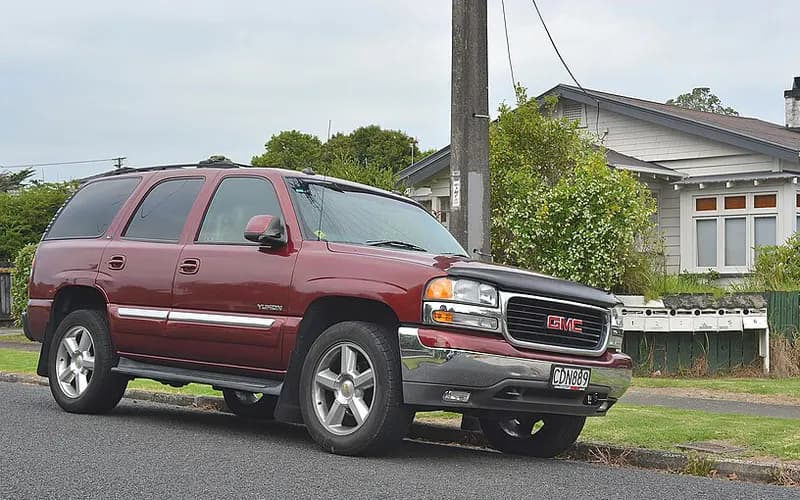
GMC Yukon 2000–2006
Common on this vehicle:NoiseLiftgate, rear glass or door lockSeat or seat heaterAir conditioning or heaterPower windowCorrosion or rustWipersGauge or instrument fault
Possible causes
The documents say what to doOnly records name itThe size of a node, the width of a link and the numbers are records matching this search, not likelihoods.
FaultCrate・GMC Yukon 2000–2006・Body, doors and interior, 2003
Candidate cause (the documents say what to do)
Vehicle body tilt or lean left / right (torsion bar front suspension)
The procedure addresses complaints of the vehicle leaning left or right.
What to do
- Measure fender wheel-opening heights, front and rear, to quantify the lean.
- Make sure the vehicle is on a level surface such as an alignment rack.
- The front wheel-opening height is known as P height, and the rear wheel-opening height is known as R height.
- P height and R height are the distance from the ground to the highest point on the wheel-opening, going through the center of the wheel.
- Before measuring, check the fuel level and add weight if necessary to simulate a full tank.
- Check Z height and D height; see Trim Height Inspection Procedure.
Caution: The P and R heights are not set at the factory, and no specification is given for them.
In the records
No record states work done for this cause.
See the evidence (2 technical documents, 2 records)
Passages of the technical documents
GMC Yukon Models 1999 - 2006 All All All All
General Motors (published by NHTSA) 2019-03-22
With Torsion Bar Front Suspension
General Motors (published by NHTSA) 2019-03-22
This procedure should be followed to diagnose and correct customer complaints of vehicle leaning left or right.
General Motors (published by NHTSA) 2019-03-22
Generally the vehicle's stance can be adjusted with the torsion bar adjuster bolts.
General Motors (published by NHTSA) 2019-03-22
Manufacturer’s documents
- Vehicle Lean Adjustment Preliminary Information PIT3098F 2018-03-12
A cause or a result a complaint states is the owner’s view or what a dealer told them, not an established fact.
Put together by FaultCrate from public records and technical documents. The cause and the repair are for the workshop to decide with the vehicle in front of it. Counts are records, not failure rates.