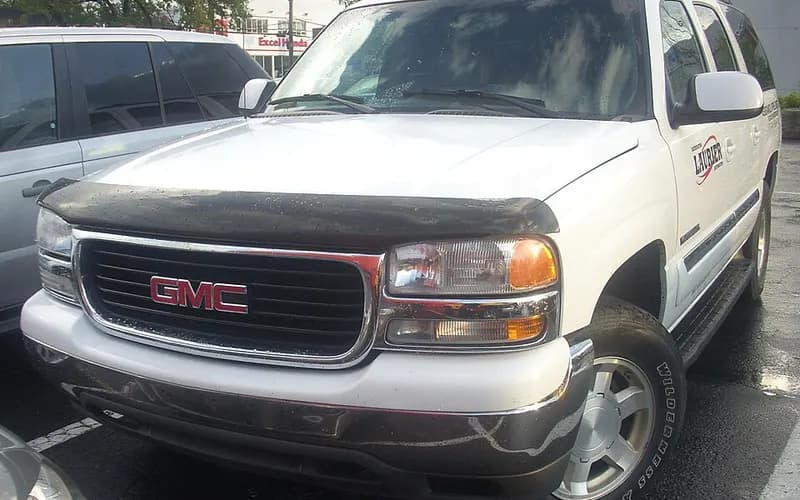
GMC Yukon XL 2000–2006
Common on this vehicle:Leak
Record by record
1 records state a cause or a remedy. Each record is shown as short labels in the order fault → finding the cause → correction. Press a label to narrow to the records that state it.
Symptom
Component named as the cause
A ribbon is as wide as the records that state both of its ends (only the commonest are drawn). A record that names several symptoms or components runs through each. Orange is records that say the fault came back or was not fixed. Results come from owners’ reports only; one that does not say is “result not stated”. None of this is a likelihood of a cause or a rate at which work succeeds.
Read the records one by one (1)
Known issuesHydro-boost brake assist and power steering share one hydraulic supply (four campaigns)1
Recall2004–2005 GMC YUKON XL ・ 2005-02-15
Hydraulic Brake Booster Pressure Accumulator Crack Recall
1Fault
2Finding the cause
3Correction
Not stated
What the documents say to do
Hydro-boost brake assist and power steering share one hydraulic supply (four campaigns)Confirm
- Perform the "Power Steering System Test" found in SI and make any necessary repairs based on system diagnosis.
Repair
- Dealers replace the hydro-boost relief valve.
- Dealers test the hydro-boost assembly for functional operation and replace it if it fails.
Caution
- An inoperative pump raises steering and braking effort but does not completely remove the ability to steer or slow the vehicle.
Read the sentences of the record
- Cause
- On certain vehicles, the hydraulic brake booster's pressure accumulator may crack and/or separate from the Hydro-Boost assembly during normal vehicle operating conditions. If a separation occurred and the hood of the vehicle was open, fragments from the accumulator could cause injury to people in the immediate area. In addition, the presence of this crack or fractured surface could allow the hydraulic fluid to leak from the accumulator circuit of the booster assembly. The loss of fluid would cause increased steering and braking effort. Correction: Dealers will test and, if necessary, replace the Hydro-Boost assembly.