GMC Yukon XL 2000–2006
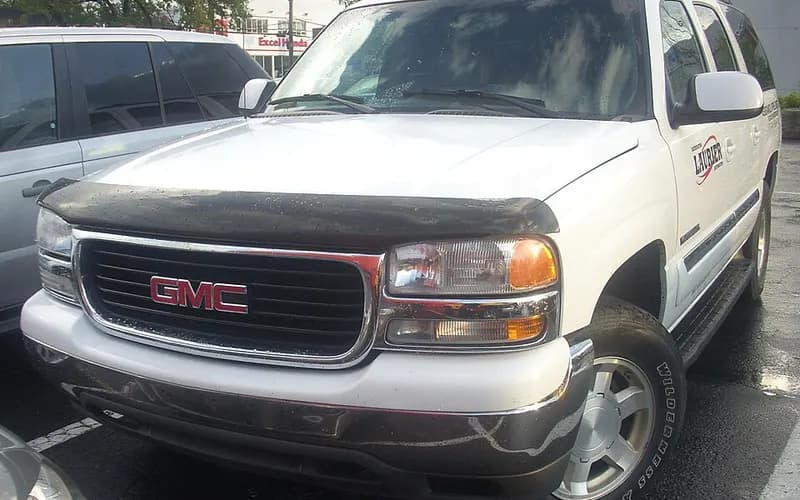
Common on this vehicle:NoiseLeakWarning lightShifting faultVibration or shudderCorrosion or rustGauge or instrument faultMisfire or rough idle
Possible causes
Causes with no correction stated (4)
Causes the records name for which no check or repair is stated, in a technical document or in a record. Press one for the records that name it.
- Transmission and driveline
- Transfer Case: broken (2)Differential: clogged or contaminated (1)Locking Rear Differential (1)
- Other
- Bearing: failed (1)
The documents say what to doOnly records name itThe size of a node, the width of a link and the numbers are records matching this search, not likelihoods.
FaultCrate・GMC Yukon XL 2000–2006・Transmission and driveline, 2002
Candidate cause (the documents say what to do)
Steering intermediate shaft clunk
A clunking noise under the hood that can be felt in the steering wheel and/or steering column.
Intermediate steering shaft clunk noise or stick-slip.
What to do
- When properly lubricated, there should be 13 mm (1/2 inch) of grease showing on the shaft splines.
- Replace the upper intermediate steering shaft assembly.
- There are significant differences between the car and truck procedures: the lubricant is applied to a different part of the steering system and uses a different lubrication kit, 26098419.
- On the affected trucks, remove the intermediate steering shaft from the vehicle and remove the spacer clip.
- Apply the contents of the syringe supplied with the kit into the open end of the fully-extended intermediate shaft.
- Insert the plug into the opening and tighten the wing nut.
What is needed
- Parts and materials
- Upper intermediate steering shaft assembly
- Lubrication kit 26098419 (for trucks; different from the car kit)
Part numbers printed in the document
26098419Lubricant, Intermediate Steering ShaftLook up at RockAuto (aftermarket candidates) ↗Search the web ↗
Discontinued (no successor stated)as stated by GMPartsGiant (checked 2026-10-06) ↗
The numbers are as the document prints them. The name and the replacing number are what the pages of GMPartsGiant, a reseller of genuine parts and not GM, state. Aftermarket equivalents are not checked here (the links only search by number). Confirm the fit for the vehicle (VIN) before ordering.
- Labor time
- Not stated
- Special tools
- Not stated
- Scan tool
- Not stated
Only what the technical documents state. "Not stated" does not mean not needed.
In the records
- Intermediate Steering Shaft: replaced 1(says it did not fix it: 1)
- Running Board: adjusted 1(result not stated: 1)
- Transmission Gasket: replaced 1(result not stated: 1)
See the evidence (1 technical documents, 2 records)
Passages of the technical documents
A clunking noise under the hood that can be felt in the steering wheel and/or steering column.
CLUNKING NOISE UNDER HOOD AND CAN BE FELT IN STEERING WHEEL AND/OR STEERING COLUMN
NHTSA manufacturer-communications index (NHTSA's one-line summary of a GM bulletin; not the bulletin text) 2008-04-01
Replace the upper intermediate steering shaft assembly.
(REPLACE UPPER INTERMEDIATE STEERING SHAFT [I-SHAFT] ASSEMBLY)
NHTSA manufacturer-communications index (NHTSA's one-line summary of a GM bulletin; not the bulletin text) 2008-04-01
Intermediate steering shaft clunk noise or stick-slip.
INTERMEDIATE STEERING SHAFT CLUNK NOISE OR STICK-SLIP (FOLLOW STRATEGY BASED DIAGNOSTICS).
NHTSA manufacturer-communications index (NHTSA's one-line summary of a GM bulletin; not the bulletin text) 2006-02-01
The condition is covered in bulletin 00-02-35-003A and applies to 1999-2002 C/K pickup and utility models with recirculating ball steering.
The condition covered here is found in bulletin 00-02-35-003A, and applies to 1999- 2002 C/K pickup and utility models with recirculating ball steering.
General Motors 2002-04-01
Records
- Steering noise and transmission clunking, window regulator failure, transmission fluid leak Owner complaint 2005-03-07
A cause or a result a complaint states is the owner’s view or what a dealer told them, not an established fact.
Put together by FaultCrate from public records and technical documents. The cause and the repair are for the workshop to decide with the vehicle in front of it. Counts are records, not failure rates.