GMC Yukon XL 2000–2006
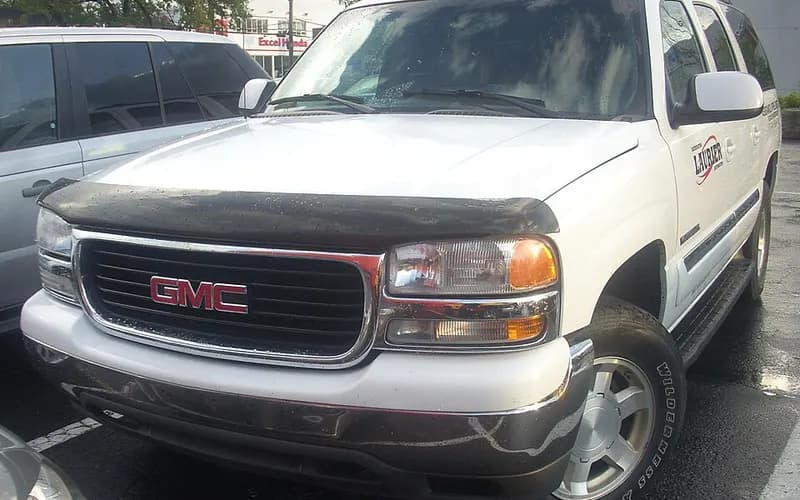
Common on this vehicle:Warning lightLeakSmoke or fire
Record by record
10 records state a cause or a remedy. Each record is shown as short labels in the order fault → finding the cause → correction. Press a label to narrow to the records that state it.
Symptom
Component named as the cause
A ribbon is as wide as the records that state both of its ends (only the commonest are drawn). A record that names several symptoms or components runs through each. Orange is records that say the fault came back or was not fixed. Results come from owners’ reports only; one that does not say is “result not stated”. None of this is a likelihood of a cause or a rate at which work succeeds.
Read the records one by one (4)
Known issuesP0420 / P0430 on a new or just-replaced catalytic converter (break-in not completed)1
Manufacturer communication2004–2006 GMC YUKON XL ・ 2017-08-15(3 earlier editions of this document folded here)
Service Engine Soon Light at Low Mileage Diagnostic Information
1Fault
- An SES light may appear on low mileage vehicles or after a recent catalytic converter replacement.
- DTCs P0420 and/or P0430 may be stored.
2Finding the cause
Possible causes
- After a converter replacement the engine run time restrictions are no longer in place because the vehicle is no longer new, so the converter may not complete a thorough break-in cycle, possibly resulting in a false DTC P0420 and/or P0430.
Steps to confirm (in the document’s order)
- On a new or low mileage vehicle, use the Tech 2 to verify engine run time on the Engine Hour Meter in the IPC data display.
3Correction
Repair
- Clear the DTCs and perform the drive cycle described in the document.
- Drive cycle step: drive at sustained highway speed for 25 to 30 minutes, then stop.
- Drive cycle step: after the engine has been off for 1 minute, restart and resume highway speed for an additional 10 to 15 minutes.
- If the diagnostics do not pass after the drive cycle, perform SI diagnostics and repair as necessary.
Read the sentences of the record
From the manufacturer’s document
- Applies to:The model list names 2004 - 2017 GMC Savana, Sierra, Sierra Hybrid, Yukon and Yukon Hybrid.
- Condition:An SES light may appear on low mileage vehicles or after a recent catalytic converter replacement.
- Condition:DTCs P0420 and/or P0430 may be stored.
- Cause:After a converter replacement the engine run time restrictions are no longer in place because the vehicle is no longer new, so the converter may not complete a thorough break-in cycle, possibly resulting in a false DTC P0420 and/or P0430.
- Confirm:On a new or low mileage vehicle, use the Tech 2 to verify engine run time on the Engine Hour Meter in the IPC data display.
- Repair:Clear the DTCs and perform the drive cycle described in the document.
- Repair:Drive cycle step: drive at sustained highway speed for 25 to 30 minutes, then stop.
- Repair:Drive cycle step: after the engine has been off for 1 minute, restart and resume highway speed for an additional 10 to 15 minutes.
- Repair:If the diagnostics do not pass after the drive cycle, perform SI diagnostics and repair as necessary.
Open the manufacturer’s document (PDF) ↗ The points above were read from this document.
- Remedy
- This Preliminary Information communication provides information to the technician on the steps to diagnose and repair vehicles that may have a Service Engine Soon Malfunction Indicator Lamp on at low mileage. Technician may find Diagnostic Trouble Codes P0420 and or P0430 stored. Technician should be advised that the catalytic converter efficiency Diagnostic Trouble Codes P0420 and P0430 are disabled for the first hour of engine run time to allow break-in of the catalytic converter. Technician will need to use a Tech2 to check the verify engine run time on the Engine Hour Meter in the Instrument Panel Cluster  Data Display/Data 1 List in the scan tool match. If the engine run time is less than one hour, the battery may have been disconnected, or another vehicle power loss event may have occurred, during vehicle manufacturing. Technician will need to clear the Diagnostic Trouble Codes and perform a drive cycle. If the catalytic converter was replaced and the Diagnostic Trouble Codes set it may be a result of the engine run time restrictions no longer being in place since the vehicle is no longer new. Technician will need to clear the Diagnostic Trouble Codes and perform a drive cycle.
ENGINE AND ENGINE COOLING3
Manufacturer communication2000–2006 GMC YUKON XL DENALI ・ 2022-09-07
MIL Illuminated with Fuel Trim and Oxygen Sensor Codes
1Fault
- Customers may comment that the MIL is illuminated.
- Initial diagnosis may show fuel trim and O2 sensor related codes including P0101, P0137, P0138, P0140, P0141, P0157, P0158, P0160 and P0161.
- The listed codes also include P0171, P0174, P0420, P0430, P1174 and P1175.
2Finding the cause
Possible causes
- These methods find small leaks around the O2 sensor embossments and slight cracks in an intake plenum or gasket.
Steps to confirm (in the document’s order)
- If normal SI diagnostics do not lead to a resolution and an intake vacuum leak or exhaust leak is suspected, use the GE-52250 Variable Pressure Leak Detector (preferred), the J-41416 ultrasonic leak tester, or possibly soapy water with low pressure air into the tailpipe to find the leak.
- For an intake leak, introduce the smoke into the brake booster hose or the oil dipstick tube; soapy water can be sprayed near the gasket, seams and all vacuum nipples.
- For an exhaust leak, put the hose with smoke or air into the tailpipe sealed with shop towels, then spray soapy water around seals, seams and bosses.
3Correction
Parts
- No parts are required for this repair.
Caution
- All of these tests are much more effective if the throttle body is covered or sealed.
Read the sentences of the record
From the manufacturer’s document
- Applies to:Applies to Buick, Cadillac, Chevrolet and GMC passenger cars and trucks, model years 2000 to 2022, gasoline engines only.
- Condition:Customers may comment that the MIL is illuminated.
- Condition:Initial diagnosis may show fuel trim and O2 sensor related codes including P0101, P0137, P0138, P0140, P0141, P0157, P0158, P0160 and P0161.
- Condition:The listed codes also include P0171, P0174, P0420, P0430, P1174 and P1175.
- Confirm:If normal SI diagnostics do not lead to a resolution and an intake vacuum leak or exhaust leak is suspected, use the GE-52250 Variable Pressure Leak Detector (preferred), the J-41416 ultrasonic leak tester, or possibly soapy water with low pressure air into the tailpipe to find the leak.
- Caution:All of these tests are much more effective if the throttle body is covered or sealed.
- Confirm:For an intake leak, introduce the smoke into the brake booster hose or the oil dipstick tube; soapy water can be sprayed near the gasket, seams and all vacuum nipples.
- Confirm:For an exhaust leak, put the hose with smoke or air into the tailpipe sealed with shop towels, then spray soapy water around seals, seams and bosses.
- Cause:These methods find small leaks around the O2 sensor embossments and slight cracks in an intake plenum or gasket.
- Parts:No parts are required for this repair.
Open the manufacturer’s document (PDF) ↗ The points above were read from this document.
- Remedy
- This bulletin provides information on tools available to find an intake vacuum leak or exhaust leak to correct a condition of MIL Illuminated with Multiple Fuel Trim and/or Oxygen Sensor Codes Set.
Manufacturer communication2000–2006 GMC YUKON XL ・ 2019-03-18
Diagnostic Tip: Using Smoke Machine and Ultrasonic Detector for Air Leaks
1Fault
- The SES light is on, and initial diagnosis may show fuel trim and/or O2 sensor related codes such as P0171, P0174, P0420 and P0430.
2Finding the cause
Steps to confirm (in the document’s order)
- If normal SI diagnostics do not resolve it and an intake vacuum leak or exhaust leak is suspected, the J41413-200 Evaporative System Tester smoke machine, the J-41416 ultrasonic leak tester, or soapy water with low pressure air into the tailpipe may help find the leak.
- For an intake leak, the smoke can be introduced into the brake booster hose or the oil dipstick tube.
- Soapy water can be sprayed near the gasket and seams and on all vacuum nipples.
- For an exhaust leak, a hose into the tailpipe carrying smoke or air, sealed with shop towels, is effective.
- Then spray soapy water around the seals, seams and bosses.
3Correction
Caution
- All of these tests are much more effective if the throttle body is covered/sealed.
Read the sentences of the record
From the manufacturer’s document
- Applies to:Applies to all 2000 - 2019 models with gasoline engines.
- Condition:The SES light is on, and initial diagnosis may show fuel trim and/or O2 sensor related codes such as P0171, P0174, P0420 and P0430.
- Confirm:If normal SI diagnostics do not resolve it and an intake vacuum leak or exhaust leak is suspected, the J41413-200 Evaporative System Tester smoke machine, the J-41416 ultrasonic leak tester, or soapy water with low pressure air into the tailpipe may help find the leak.
- Caution:All of these tests are much more effective if the throttle body is covered/sealed.
- Confirm:For an intake leak, the smoke can be introduced into the brake booster hose or the oil dipstick tube.
- Confirm:Soapy water can be sprayed near the gasket and seams and on all vacuum nipples.
- Confirm:For an exhaust leak, a hose into the tailpipe carrying smoke or air, sealed with shop towels, is effective.
- Confirm:Then spray soapy water around the seals, seams and bosses.
- Confirm:These methods are very good for finding small leaks around the O2 sensor bosses and slight cracks in an intake plenum or gasket.
Open the manufacturer’s document (PDF) ↗ The points above were read from this document.
- Remedy
- This preliminary information document communicates a tip on the way to diagnose possible induction or exhaust air leaks using the evaporative emission cart smoke machine and ultrasonic leak detector tools.
Manufacturer communication2000–2006 GMC YUKON XL ・ 2018-05-07(3 earlier editions of this document folded here)
Premature Catalytic Converter Failures – Preliminary Information
1Fault
- The catalytic converter has come apart or has set P0420 and/or P0430.
2Finding the cause
Steps to confirm (in the document’s order)
- If the converter has failed with no apparent reason, inspect for a poor crimp at the circuit terminal on the engine bank with the concern.
- The grounds in question are those for the ignition system, fuel injector or the ECM.
- Inspect the ground for corrosion or damage at the ground terminal ring, fasteners and grounding surfaces.
3Correction
Repair
- If no corrosion or damage is found, tighten the ground bolt to the proper torque.
Read the sentences of the record
From the manufacturer’s document
- Applies to:Applies to 2015 and prior GM cars and gasoline-powered light duty and HD trucks.
- Condition:The catalytic converter has come apart or has set P0420 and/or P0430.
- Confirm:If the converter has failed with no apparent reason, inspect for a poor crimp at the circuit terminal on the engine bank with the concern.
- Confirm:The grounds in question are those for the ignition system, fuel injector or the ECM.
- Confirm:Inspect the ground for corrosion or damage at the ground terminal ring, fasteners and grounding surfaces.
- Repair:If no corrosion or damage is found, tighten the ground bolt to the proper torque.
Open the manufacturer’s document (PDF) ↗ The points above were read from this document.
- Remedy
- This Preliminary Information communication provides information to the technician about gasoline powered cars, mid-size trucks, light duty trucks, and heavy duty trucks with premature catalytic converter failures. It is recommended to inspect for a poor crimp on the grounds ring terminal at the engine block for the bank with the concern and repair the wire.
Showing 4 of the 10 you can open. Narrow the search to see the rest.