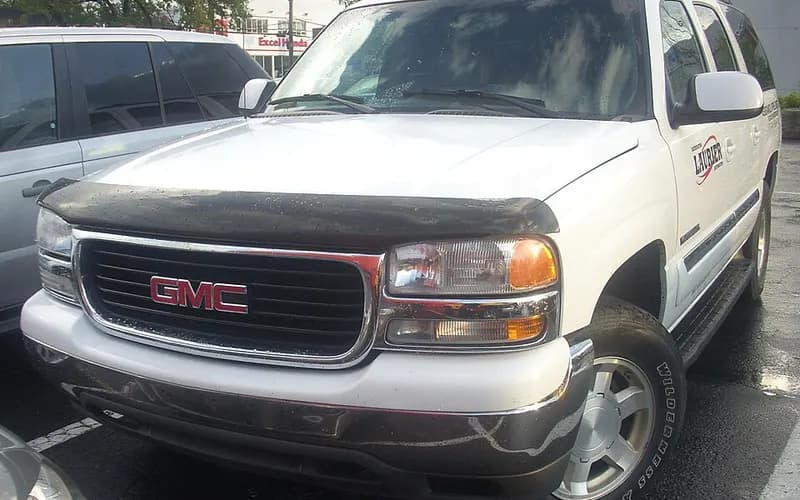
GMC Yukon XL 2000–2006
Common on this vehicle:Leak
Record by record
3 records state a cause or a remedy. Each record is shown as short labels in the order fault → finding the cause → correction. Press a label to narrow to the records that state it.
Symptom
Component named as the cause
Work done
A ribbon is as wide as the records that state both of its ends (only the commonest are drawn). A record that names several symptoms or components runs through each. Orange is records that say the fault came back or was not fixed. Results come from owners’ reports only; one that does not say is “result not stated”. None of this is a likelihood of a cause or a rate at which work succeeds.
Read the records one by one (3)
Known issuesBrake pedal moves or self applies at full steering lock (Hydro-Boost)2
Manufacturer communication2001–2004 GMC YUKON XL ・ 2017-08-15
Hydro-Boost Brake Unit - Preliminary Information
1Fault
Not stated
2Finding the cause
Not stated
3Correction
Read the sentences of the record
- Remedy
- This Preliminary Information communication advises the technician that the Hydro-Boost is not serviceable and will need to be replaced if the brake pedal moves or applies on its own at a full turn.
Manufacturer communication2001–2004 GMC YUKON XL ・ 2017-08-15
Hydro-Boost Brake System Service Communication
1Fault
Not stated
2Finding the cause
Not stated
3Correction
Read the sentences of the record
- Remedy
- This Preliminary Information communication advises the technician that the Hydro-Boost is not serviceable and will need to be replaced if the brake pedal moves or applies on its own at a full turn.
Known issuesHydro-boost brake assist and power steering share one hydraulic supply (four campaigns)1
Recall2004–2005 GMC YUKON XL ・ 2005-08-02
Bosch Hydro-Boost Brake Accumulator Crack Recall
1Fault
- The hydraulic brake booster's pressure accumulator may crack and/or separate from the Hydro-Boost assembly in normal operation; if it separates with the hood open, fragments could injure people nearby.
- The crack or fractured surface could let hydraulic fluid leak from the accumulator circuit of the booster, and the loss of fluid would increase steering and braking effort.
2Finding the cause
Possible causes
- The over-pressurization comes from a two-function valve (TFV) that does not open within its specified limits while the hydraulic fluid in the accumulator circuit expands as the booster is exposed to rising under-hood temperatures.
Steps to confirm (in the document’s order)
- With the engine OFF, make at least five (5) high effort brake applies until the pedal feels hard.
- Turn the steering wheel to the steering lock (fully turned) position, hold for 1 to 2 seconds, then release; do this a total of 3 times.
- Install the inlet port adapter, CH 47950-2, into the booster supply port and slowly tighten it with a torque wrench to 16 N·m (12 lb ft).
- Install the accumulator pressure clamp, CH 47950-1, by sliding it over the accumulator so that it straddles the hydro-boost housing.
- If fluid comes out of the inlet port adapter at up to 65 N·m (48 lb ft) maximum torque on the clamp bolt, the hydro-boost booster assembly is OK.
3Correction
Repair
- If no fluid is seen, complete Steps 19-27 and repeat Steps 1-18; if no fluid is visible in the second evaluation, replace the hydro-boost unit.
- After the test, reinstall the supply hose/tube to the booster and tighten to 28 N·m (21 lb ft).
- When the booster is replaced, install the 4 booster to bulkhead nuts and tighten them to 36 N·m (26 lb ft).
Caution
- The inspection uses the Hydro-Boost Checking Tool, CH 47950, shipped to each dealer.
- After starting the engine, do not depress the brake pedal until instructed.
- Incorrect installation of the fixture washer will damage the accumulator end.
Read the sentences of the record
From the manufacturer’s document
- Applies to:The recall covers certain 2004 Chevrolet Kodiak and GMC TopKick; 2004-2005 Chevrolet Avalanche, Express, Silverado, Suburban; GMC Savana, Sierra, Yukon XL; and HUMMER H2 vehicles built within the listed VIN breakpoints.
- Applies to:GM limited the recall to dealer stock vehicles and sold vehicles with less than 150 days in service.
- Condition:The hydraulic brake booster's pressure accumulator may crack and/or separate from the Hydro-Boost assembly in normal operation; if it separates with the hood open, fragments could injure people nearby.
- Condition:The crack or fractured surface could let hydraulic fluid leak from the accumulator circuit of the booster, and the loss of fluid would increase steering and braking effort.
- Cause:The over-pressurization comes from a two-function valve (TFV) that does not open within its specified limits while the hydraulic fluid in the accumulator circuit expands as the booster is exposed to rising under-hood temperatures.
- Caution:The inspection uses the Hydro-Boost Checking Tool, CH 47950, shipped to each dealer.
- Confirm:With the engine OFF, make at least five (5) high effort brake applies until the pedal feels hard.
- Caution:After starting the engine, do not depress the brake pedal until instructed.
- Confirm:Turn the steering wheel to the steering lock (fully turned) position, hold for 1 to 2 seconds, then release; do this a total of 3 times.
- Confirm:Install the inlet port adapter, CH 47950-2, into the booster supply port and slowly tighten it with a torque wrench to 16 N·m (12 lb ft).
- Confirm:Install the accumulator pressure clamp, CH 47950-1, by sliding it over the accumulator so that it straddles the hydro-boost housing.
- Caution:Incorrect installation of the fixture washer will damage the accumulator end.
- Confirm:If fluid comes out of the inlet port adapter at up to 65 N·m (48 lb ft) maximum torque on the clamp bolt, the hydro-boost booster assembly is OK.
- Repair:If no fluid is seen, complete Steps 19-27 and repeat Steps 1-18; if no fluid is visible in the second evaluation, replace the hydro-boost unit.
- Repair:After the test, reinstall the supply hose/tube to the booster and tighten to 28 N·m (21 lb ft).
- Repair:When the booster is replaced, install the 4 booster to bulkhead nuts and tighten them to 36 N·m (26 lb ft).
- Cause
- CERTAIN TRUCKS, SPORT UTILITY VEHICLES, AND VANS EQUIPPED WITH BOSCH HYDRO-BOOST BRAKE ASSEMBLIES, THE HYDRAULIC BRAKE BOOSTER PRESSURE ACCUMULATOR MAY CRACK AND SEPARATE FROM THE HYDRO-BOOST ASSEMBLY DURING NORMAL OPERATING CONDITIONS.
- Remedy
- DEALERS WILL TEST THE HYDRO-BOOST ASSEMBLY FOR FUNCTIONAL OPERATION OF THE TWO-FUNCTION VALVE. IF THE HYDRO-BOOST ASSEMBLY FAILS THE TEST, DEALERS WILL REPLACE THE ASSEMBLY FREE OF CHARGE. THE RECALL BEGAN ON MARCH 23, 2005. OWNERS MAY CONTACT CHEVROLET AT 1-800-630-2438, GMC TRUCKS AT 1-866-996-9463 AND HUMMER AT 1-800-732-5493.
- Consequence
- IF A SEPARATION OCCURRED AND THE HOOD OF THE VEHICLE WERE OPEN, FRAGMENTS FROM THE ACCUMULATOR COULD CAUSE INJURY TO PEOPLE IN THE IMMEDIATE AREA. THE PRESENCE OF THIS CRACK OR FRACTURED SURFACE COULD ALLOW THE HYDRAULIC FLUID TO LEAK FROM THE ACCUMULATOR CIRCUIT OF THE BOOSTER ASSEMBLY. THE LOSS OF FLUID WOULD CAUSE INCREASED STEERING AND BRAKING EFFORT AND A CRASH MAY OCCUR WITHOUT PRIOR WARNING.