GMC Yukon XL 2000–2006
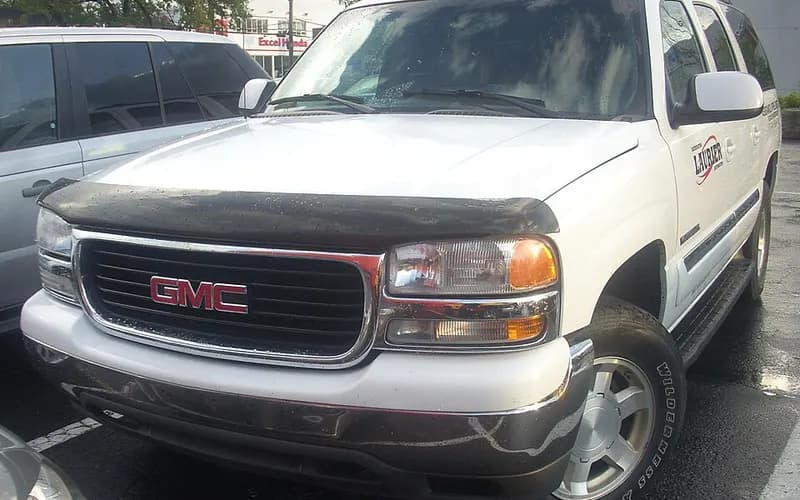
Common on this vehicle:Gauge or instrument faultWarning lightCorrosion or rustNoiseLeakReduced brakingStalls or shuts offLoss of engine power, no acceleration
Record by record
126 records state a cause or a remedy. Each record is shown as short labels in the order fault → finding the cause → correction. Press a label to narrow to the records that state it.
Component named as the cause
Work done
How it is said to have ended
- says it was fixed3
- says it held for a while3
- says it came back9
- says it did not fix it3
- result not stated18
A ribbon is as wide as the records that state both of its ends (only the commonest are drawn). A record that names several symptoms or components runs through each. Orange is records that say the fault came back or was not fixed. Results come from owners’ reports only; one that does not say is “result not stated”. None of this is a likelihood of a cause or a rate at which work succeeds.
Read the records one by one (29)
Known issuesSnap or popping noise from the front of the vehicle (slot the front crossmember mounting holes)2
Owner complaint2003 GMC YUKON XL ・ 2005-08-04
Steering column thumping/popping noise and front tire wear since new
1Fault
2Finding the cause
3Correction
Read the sentences of the record
- Cause
- FRONT-END SPECIALIST SAID THAT THERE IS A DEFECT IN GM TORSION BAR SUSPENSION SYSTEM THAT IS CAUSING MOST OF THESE PROBLEMS BUT GM REPS WILL NOT ACKNOWLEDGE OR REMEDY. *JB
- Remedy
- DEALER PACKED INTERMEDIATE STEERING SHAFT WITH GREASE. (2 more)
- Inspection
- DEALER COULD NOT DUPLICATE NOISE.
- Outcome
- DID NOT WORK. (2 more)
Owner complaint2005 GMC YUKON XL ・ 2008-07-08
Loud popping or clicking sound during turns, recurring at multiple mileages
1Fault
2Finding the cause
Not stated
3Correction
Read the sentences of the record
- Fault
- WHILE MAKING EITHER A LEFT OR RIGHT TURN AT 10 MPH (= 16.1 km/h), THE CONTACT COULD HEAR A LOUD POPPING OR CLICKING SOUND. (1 more)
- Remedy
- SHE TOOK THE VEHICLE TO A LOCAL DEALER AND THEY ADJUSTED THE STRAPS, LUBED THE FRONT, AND TIGHTENED THE CROSS MEMBER BOLTS. (6 more)
- Inspection
- AT 67,762 MILES (= 109,052 km), THE DEALER STATED THAT THE DRIVE SHAFT NEEDED TO BE REPLACED.
Known issuesSingle-cylinder misfire (P0300-P0308) and/or chirp, squeak or tick at camshaft speed: worn cam lobe / lifter, valve or valve spring2
Manufacturer communication2002–2006 GMC YUKON XL DENALI ・ 2023-05-06(3 earlier editions of this document folded here)
Diagnostic tip: valve, lifter or camshaft issue
1Fault
- Misfire, chirp, squeak, squeal or tick noise, or MIL illuminated.
- DTCs P0300 (engine misfire detected) and P0301 through P0308 (misfire detected on cylinders 1 through 8) are listed.
2Finding the cause
Possible causes
- Possible causes: worn camshaft lobe and/or lifter roller, a sticking valve, valve leakage, a broken valve spring, or a collapsed AFM lifter.
Steps to confirm (in the document’s order)
- A verified noise is not eliminated by canceling fuel injectors and occurs at camshaft speed (half of crankshaft speed).
- If applying pressure to the valve side of the rocker changes the noise, a lifter and/or cam lobe concern on that cylinder is most likely.
- Disconnect the coils and injectors on one bank, run the engine with that valve cover removed, back off the rocker arm a couple of turns and listen for a change in the noise.
- Measure cam lobe lift at the pushrod side of the rocker arm and compare with other rockers on the same bank; the misfiring or ticking cylinder should have clearly less lift.
- A good indicator of a sticking valve is misfires that keep counting on an aggressive deceleration with engine braking.
3Correction
Repair
- If a worn camshaft lobe or lifter roller is found, replace the camshaft and all lifters, and the plastic lifter guide for the affected lifter.
Caution
- A damaged cam lobe is easy to overlook through the lifter bores, and unworn lifter rollers do not mean the cam lobes are okay; inspect both carefully.
Read the sentences of the record
From the manufacturer’s document
- Applies to:Applies to GM passenger cars and trucks, 2002 through 2023, with V6/V8 pushrod engines.
- Condition:Misfire, chirp, squeak, squeal or tick noise, or MIL illuminated.
- Condition:DTCs P0300 (engine misfire detected) and P0301 through P0308 (misfire detected on cylinders 1 through 8) are listed.
- Confirm:A verified noise is not eliminated by canceling fuel injectors and occurs at camshaft speed (half of crankshaft speed).
- Cause:Possible causes: worn camshaft lobe and/or lifter roller, a sticking valve, valve leakage, a broken valve spring, or a collapsed AFM lifter.
- Confirm:If applying pressure to the valve side of the rocker changes the noise, a lifter and/or cam lobe concern on that cylinder is most likely.
- Confirm:Disconnect the coils and injectors on one bank, run the engine with that valve cover removed, back off the rocker arm a couple of turns and listen for a change in the noise.
- Confirm:Measure cam lobe lift at the pushrod side of the rocker arm and compare with other rockers on the same bank; the misfiring or ticking cylinder should have clearly less lift.
- Caution:A damaged cam lobe is easy to overlook through the lifter bores, and unworn lifter rollers do not mean the cam lobes are okay; inspect both carefully.
- Repair:If a worn camshaft lobe or lifter roller is found, replace the camshaft and all lifters, and the plastic lifter guide for the affected lifter.
- Confirm:A good indicator of a sticking valve is misfires that keep counting on an aggressive deceleration with engine braking.
- Confirm:A broken valve spring may stay stacked together and be hard to see; lightly push on different places on the springs with a small hammer handle.
Open the manufacturer’s document (PDF) ↗ The points above were read from this document.
- Remedy
- This diagnostic tip bulletin provides additional information on how to diagnose a possible valve, lifter or camshaft issue.
Manufacturer communication2000–2006 GMC YUKON XL ・ 2017-08-15
Engine Misfire and Service Engine Soon Lamp Information
1Fault
- With the SES light on, a P0300-P0308 DTC is found with misfires counting on a single cylinder, which may or may not be felt.
- The noise may be described as a chirp, squeak, squeal or tick and may increase off of idle.
2Finding the cause
- Valve Spring: broken
- Active Fuel Management Lifter: defective
- Valve: defective
- Camshaft Lobe: worn
- Lifter Roller: worn
Possible causes
- A worn cam lobe on this engine family generally makes a consistent chirp, squeak, squeal or tick at camshaft speed and/or a misfire with a P0300-P0308 DTC.
Steps to confirm (in the document’s order)
- Press on the rocker arms with a wooden hammer handle while the noise is present; if pressing the valve side of a rocker changes the noise, a lifter and/or cam lobe concern on that cylinder is most likely.
- Measure cam lobe lift at the push rod side of the rocker arm; it will differ from the SI specification but should be similar to the other rockers on the same bank.
- A bore scope or pen light may help when inspecting the cam lobes through the lifter bores.
- A good sign of a sticking valve is that misfires keep counting during an aggressive deceleration with engine braking.
- The Cylinder Leakage Test in SI should typically isolate valve leakage by showing excessive leakage past an intake or exhaust valve compared with the others.
3Correction
Repair
- If a worn cam lobe or lifter roller is found, replace the camshaft and all lifters per SI, plus the plastic lifter guide for the affected lifter (for the 2010 model year, all the plastic lifter guides).
- If force is needed to tap the valve off its seat, there is excessive carbon build up, which may be repaired by decarboning the engine.
Read the sentences of the record
From the manufacturer’s document
- Applies to:Applies to 1999-2013 GMC Savana, Sierra and Yukon (with a V8 engine per the model list) (note: the Yukon years run later than the years this service covers).
- Condition:With the SES light on, a P0300-P0308 DTC is found with misfires counting on a single cylinder, which may or may not be felt.
- Condition:The noise may be described as a chirp, squeak, squeal or tick and may increase off of idle.
- Cause:A worn cam lobe on this engine family generally makes a consistent chirp, squeak, squeal or tick at camshaft speed and/or a misfire with a P0300-P0308 DTC.
- Confirm:Press on the rocker arms with a wooden hammer handle while the noise is present; if pressing the valve side of a rocker changes the noise, a lifter and/or cam lobe concern on that cylinder is most likely.
- Confirm:Measure cam lobe lift at the push rod side of the rocker arm; it will differ from the SI specification but should be similar to the other rockers on the same bank.
- Confirm:A bore scope or pen light may help when inspecting the cam lobes through the lifter bores.
- Repair:If a worn cam lobe or lifter roller is found, replace the camshaft and all lifters per SI, plus the plastic lifter guide for the affected lifter (for the 2010 model year, all the plastic lifter guides).
- Confirm:A good sign of a sticking valve is that misfires keep counting during an aggressive deceleration with engine braking.
- Repair:If force is needed to tap the valve off its seat, there is excessive carbon build up, which may be repaired by decarboning the engine.
- Confirm:The Cylinder Leakage Test in SI should typically isolate valve leakage by showing excessive leakage past an intake or exhaust valve compared with the others.
- Confirm:The two pieces of a broken valve spring can stay stacked together and be hard to see, so lightly push on different places on the springs with a small hammer handle.
Open the manufacturer’s document (PDF) ↗ The points above were read from this document.
- Remedy
- This Preliminary Information communication provides information to the technician about vehicles that have a Service Engine Soon Malfunction Indicator Lamp on, engine misfire, and/or engine noise. Technician may find Diagnostic Trouble Codes P0300-P0308. If published Service Information diagnostics does not isolate the cause of this concern technician should check for a worn camshaft lobe and/or lifter roller, a sticking valve, valve leakage, a broken valve spring, and a collapsed active fuel management lifter.
Known issuesSteering intermediate shaft clunk2
Owner complaint2003 GMC YUKON XL 1500 ・ 2009-03-03
2003 GMC Yukon XL 1500 intermediate steering section clunking and loose steering
1Fault
2Finding the cause
THEY ARE WELL AWARE THAT THIS WAS A POOR ENGINEERING DESIGN. *TR
3Correction
THE DEALER LUBRICATED IT A NUMBER OF TIMES UNTIL THE WARRANTY RAN OUT. (1 more)
What the documents say to do
Steering intermediate shaft clunkConfirm
- When properly lubricated, there should be 13 mm (1/2 inch) of grease showing on the shaft splines.
Repair
- Replace the upper intermediate steering shaft assembly.
- There are significant differences between the car and truck procedures: the lubricant is applied to a different part of the steering system and uses a different lubrication kit, 26098419.
Read the sentences of the record
- Fault
- I OWN A 2003 GMC YUKON XL 1500 THAT HAS A CONTINUING PROBLEM WITH THE INTERMEDIATE STEERING SECTION MAKING A CLUNKING SOUND AND AS THE SOUND GETS WORSE, THE STEERING BECOMES LOOSE.
- Cause
- THEY ARE WELL AWARE THAT THIS WAS A POOR ENGINEERING DESIGN. *TR
- Remedy
- THE DEALER LUBRICATED IT A NUMBER OF TIMES UNTIL THE WARRANTY RAN OUT. (1 more)
- Outcome
- THE PROBLEM RETURNED AT ABOUT 85000 MILES (= 136,794 km).
Owner complaint2002 GMC YUKON XL ・ 2013-08-25
Steering rattle in new vehicle
1Fault
2Finding the cause
3Correction
DEALER RE-GREASED WITH WHAT THEY SAID WAS A NEW GREASE THAT SHOULD SOLVE THE RATTLE PROBLEM.
What the documents say to do
Steering intermediate shaft clunkConfirm
- When properly lubricated, there should be 13 mm (1/2 inch) of grease showing on the shaft splines.
Repair
- Replace the upper intermediate steering shaft assembly.
- There are significant differences between the car and truck procedures: the lubricant is applied to a different part of the steering system and uses a different lubrication kit, 26098419.
Read the sentences of the record
- Cause
- I UNDERSTAND THERE IS A REDESIGNED STEERING SHAFT THAT SOLVES THIS RATTLE PROBLEM.
- Remedy
- DEALER RE-GREASED WITH WHAT THEY SAID WAS A NEW GREASE THAT SHOULD SOLVE THE RATTLE PROBLEM.
Known issues4L60-E / 4L65-E clunk on 2-3 upshift or 3-2 downshift (normal condition)1
Manufacturer communication2005–2006 GMC YUKON XL ・ 2018-05-21
2-3 Upshift and 3-2 Downshift Clunk Normal Condition
1Fault
- A clunk noise can be heard on a 2-3 upshift or a 3-2 downshift.
- The condition may be more pronounced on a 4-wheel drive vehicle because of the additional tolerances in the transfer case.
2Finding the cause
Possible causes
- During a 2-3 upshift the 2-4 band is released and the 3-4 clutch is applied; the timing of this shift can momentarily reverse the torque on the output shaft, which makes the clunk.
- The same torque reversal can occur on a 3-2 downshift, when the 3-4 clutch is released and the 2-4 band applied.
3Correction
Caution
- For 2005 model year fullsize utilities and pickups, refer to Corporate Bulletin Number 05-07-30-012.
- This is a normal condition; no repairs should be attempted.
Read the sentences of the record
From the manufacturer’s document
- Applies to:Applies to 2014 and prior GM passenger cars and light duty trucks with the 4L60-E, 4L65-E or 4L70-E automatic transmission (RPOs M30, M32, M70).
- Caution:For 2005 model year fullsize utilities and pickups, refer to Corporate Bulletin Number 05-07-30-012.
- Condition:A clunk noise can be heard on a 2-3 upshift or a 3-2 downshift.
- Cause:During a 2-3 upshift the 2-4 band is released and the 3-4 clutch is applied; the timing of this shift can momentarily reverse the torque on the output shaft, which makes the clunk.
- Cause:The same torque reversal can occur on a 3-2 downshift, when the 3-4 clutch is released and the 2-4 band applied.
- Condition:The condition may be more pronounced on a 4-wheel drive vehicle because of the additional tolerances in the transfer case.
- Caution:This is a normal condition; no repairs should be attempted.
Open the manufacturer’s document (PDF) ↗ The points above were read from this document.
- Remedy
- This information was created to inform the technician that the 2-3 upshift and the 3-2 downshift clunk is caused by the releasing of the 2-4 band and application of the 3-4 clutch assembly during an upshift. Also during a 3-2 downshift, the releasing of the 3-4 clutch during the application of the 2-4 band, can cause torque reversal down the output shaft creating a clunk. This is a normal condition.
Known issuesAftermarket part (not the vehicle as built): Federal-Mogul National / Carquest replacement wheel hub assembly retention nut - recall 07E-1061
Recall2000–2006 GMC YUKON XL ・ —
Wheel Hub Assembly Bearing Nut Loosening Recall
1Fault
- The inboard retention nut that maintains the hub bearing assembly can loosen, resulting in an ABS light indication, noise, and/or wheel separation from the vehicle; wheel separation can result in a vehicle crash.
2Finding the cause
Steps to confirm (in the document’s order)
- On 2x4 vehicles, raise the vehicle on an approved hoist first; the hub assembly is good if a yellow, green or blue paint mark is seen on the grease cap on the inboard side of the steering knuckle.
- If the paint mark is not present, remove the wheel and the brake rotor and clean rust from the hub assembly face to check for the date code stamping.
- Defective hub assemblies can be identified by the country of origin on the package together with a recalled date code, by the date code on the package, or by the date code on the hub assembly.
- If a round yellow sticker is present on the box label, the part is good.
3Correction
Repair
- The hub assemblies were manufactured for aftermarket use; owners of these parts should have them removed and replaced as soon as possible.
- Federal-Mogul will replace the recalled hub assemblies free of charge.
Parts
- The recalled part numbers are 515020, 515021, 515025, 515053, 515054, 515059 and 515060.
Read the sentences of the record
From the manufacturer’s document
- Applies to:This is an equipment recall by Federal-Mogul of certain wheel hub assemblies sold as replacement parts only.
- Applies to:The recalled hub assemblies were packaged and sold between January 23, 2006 and December 20, 2007 under the National and CARQUEST Premium (BGS/Blue) brands, in 7 base part numbers.
- Parts:The recalled part numbers are 515020, 515021, 515025, 515053, 515054, 515059 and 515060.
- Applies to:The application lists include GMC 1500 Yukon (2WD) and GMC 1500 Yukon XL (2WD), 2001-2006.
- Applies to:ILJIN manufactured the recalled hub assemblies from December 27, 2005 to November 29, 2007.
- Condition:The inboard retention nut that maintains the hub bearing assembly can loosen, resulting in an ABS light indication, noise, and/or wheel separation from the vehicle; wheel separation can result in a vehicle crash.
- Confirm:On 2x4 vehicles, raise the vehicle on an approved hoist first; the hub assembly is good if a yellow, green or blue paint mark is seen on the grease cap on the inboard side of the steering knuckle.
- Confirm:If the paint mark is not present, remove the wheel and the brake rotor and clean rust from the hub assembly face to check for the date code stamping.
- Confirm:Defective hub assemblies can be identified by the country of origin on the package together with a recalled date code, by the date code on the package, or by the date code on the hub assembly.
- Confirm:If a round yellow sticker is present on the box label, the part is good.
- Repair:The hub assemblies were manufactured for aftermarket use; owners of these parts should have them removed and replaced as soon as possible.
- Repair:Federal-Mogul will replace the recalled hub assemblies free of charge.
- Cause
- CERTAIN FEDERAL-MOGUL REPLACEMENT WHEEL HUB ASSEMBLIES WITH THE BRAND NAMES: NATIONAL, CARQUEST P/NOS. 515020, 515021, 515025, 515053, 515054, 515059, AND 515060, SHIPPED BETWEEN JANUARY 23, 2006, AND DECEMBER 20, 2007, SOLD FOR LIGHT DUTY AND MEDIUM DUTY TRUCKS. THE INBOARD RETENTION NUT USED TO MAINTAIN HUB BEARING ASSEMBLY CAN LOOSEN RESULTING IN AN ABS LIGHT INDICATION, NOISE, AND/OR WHEEL SEPARATION.
- Remedy
- FEDERAL-MOGUL WILL NOTIFY CUSTOMERS AND WILL REPLACE THE HUB ASSEMBLY FREE OF CHARGE. THE RECALL BEGAN ON FEBRUARY 7, 2008. OWNERS CAN CONTACT FEDERAL-MOGUL TOLL-FREE AT 877-489-6659.
- Consequence
- WHEEL SEPARATION CAN RESULT IN A VEHICLE CRASH.
Known issuesFuel pressure regulator buzz / hum after replacement (check fuel pump feed voltage drop and connector crimps)1
Manufacturer communication2000–2003 GMC YUKON XL ・ 2017-08-15
Buzz Noise at Idle After Fuel Pressure Regulator Replacement
1Fault
2Finding the cause
Not stated
3Correction
Read the sentences of the record
- Remedy
- This Preliminary Information communication provides information to the technician about vehicles that may have a buzz noise at idle after fuel pressure regulator replacement. Technician will need to gain access to the fuel pump. After gaining access to the fuel pump check the power and ground for voltage drop with the key in the off from the fuel pump to the battery post. Technician should also check the pin fit and terminal drag. Technician may replace the fuel pump connector with the updated part using the latest version service bulletin 04-06-04-088C. Technician should inspect voltage drop points at the UBEC, fuel pump relay, ground at the frame and the battery cable grounds. If excessive resistance is found at the crimps, replace the crimp n seal splice sleeves for the affected circuits. If the circuits do not have high resistance replace the regulator using part number 19236428.
Known issuesHydro-boost brake assist and power steering share one hydraulic supply (four campaigns)1
Recall2003–2004 GMC YUKON XL ・ 2004-04-02
Brake Hydro-Boost Housing Relief Valve Bore Recall
1Fault
- The relief valve bore in the brake hydro-boost module may be out of specification, which could fracture the relief valve o-ring seal inside the module.
- If the seal fractures, the driver may hear during braking an engine compartment noise like the one made when the steering wheel is turned to a full stop, and may feel slightly higher steering effort while braking and parking.
- Under certain driving conditions a fractured seal may require slightly more brake pedal effort for the same deceleration, which could result in a crash without prior warning.
2Finding the cause
Possible causes
- Inspection found a machining error in the relief bore cavity of modules produced on one of the automated boring machines used for the base housing.
Steps to confirm (in the document’s order)
- Look at the color of the relief valve: if it is metallic yellow or looks like brass, no further action is required.
- If a yellow, pink or white paint mark is visible, no further inspection or repair is required, and any stamped number is to be disregarded.
- With no paint marks and a stamped number 2, 3 or 4 visible, no further inspection or repair is required.
- If a stamped number 1 is visible on the machined surface, the relief valve must be replaced.
3Correction
Repair
- With the ignition OFF, pump the brake pedal at least ten times.
- Unscrew the original relief valve from the hydraulic brake booster with the tool supplied with the new relief valve.
- Insert the new relief valve into the bore and tighten it to 17 N·m (13 lb ft).
- With the master cylinder mounted flush to the booster, install the nuts and tighten them to 33 N·m (24 lb ft).
Parts
- Part number 10398682, VALVE KIT, P/B BOOS CONT, quantity 1 per vehicle if required.
Part numbers printed in the document
The numbers are as the document prints them. The name and the replacing number are what the pages of GMPartsGiant, a reseller of genuine parts and not GM, state. Aftermarket equivalents are not checked here (the links only search by number). Confirm the fit for the vehicle (VIN) before ordering.
Caution
- Take care when working around the accumulator, which contains high-pressure compressed gas and hydraulic fluid.
- Do not blow compressed air into the bore or flush the valve bore with commercially available cleaners; this could damage the booster or master cylinder.
Read the sentences of the record
From the manufacturer’s document
- Applies to:The recall covers certain 2003 and 2004 model year Cadillac Escalade, Escalade EXT and Escalade ESV; Chevrolet Silverado, Avalanche, Suburban and Express; GMC Sierra, Yukon, Yukon XL and Savana; HUMMER H2; and 2004 model year Chevrolet Tahoe vehicles built within the listed VIN breakpoints.
- Condition:The relief valve bore in the brake hydro-boost module may be out of specification, which could fracture the relief valve o-ring seal inside the module.
- Condition:If the seal fractures, the driver may hear during braking an engine compartment noise like the one made when the steering wheel is turned to a full stop, and may feel slightly higher steering effort while braking and parking.
- Condition:Under certain driving conditions a fractured seal may require slightly more brake pedal effort for the same deceleration, which could result in a crash without prior warning.
- Cause:Inspection found a machining error in the relief bore cavity of modules produced on one of the automated boring machines used for the base housing.
- Confirm:Look at the color of the relief valve: if it is metallic yellow or looks like brass, no further action is required.
- Confirm:If a yellow, pink or white paint mark is visible, no further inspection or repair is required, and any stamped number is to be disregarded.
- Confirm:With no paint marks and a stamped number 2, 3 or 4 visible, no further inspection or repair is required.
- Confirm:If a stamped number 1 is visible on the machined surface, the relief valve must be replaced.
- Caution:Take care when working around the accumulator, which contains high-pressure compressed gas and hydraulic fluid.
- Repair:With the ignition OFF, pump the brake pedal at least ten times.
- Repair:Unscrew the original relief valve from the hydraulic brake booster with the tool supplied with the new relief valve.
- Caution:Do not blow compressed air into the bore or flush the valve bore with commercially available cleaners; this could damage the booster or master cylinder.
- Repair:Insert the new relief valve into the bore and tighten it to 17 N·m (13 lb ft).
- Repair:With the master cylinder mounted flush to the booster, install the nuts and tighten them to 33 N·m (24 lb ft).
- Parts:Part number 10398682, VALVE KIT, P/B BOOS CONT, quantity 1 per vehicle if required.
- Cause
- CERTAIN SPORT UTILITY VEHICLES, PICKUP TRUCKS, AND PASSENGER VANS FAIL TO COMPLY WITH THE REQUIREMENTS OF FEDERAL MOTOR VEHICLE SAFETY STANDARD NO. 135, ?PASSENGER CAR BRAKE SYSTEMS.? SOME OF THESE VEHICLES WERE PRODUCED WITH AN OUT-OF-SPECIFICATION BRAKE HYDRO-BOOST HOUSING RELIEF VALVE BORE.
- Remedy
- DEALERS ARE TO REPLACE THE HYDRO-BOOST RELIEF VALVE. THE RECALL BEGAN ON JUNE 18, 2004. OWNERS SHOULD CONTACT CADILLAC AT 1-866-982-2339; CHEVROLET AT 1-800-630-2438; GMC AT 1-866-996-9463; OR HUMMER AT 1-866-486-6376.
- Consequence
- CONSEQUENTLY, THE VALVE O-RING SEAL MAY FRACTURE. STEERING EFFORTS MAY BE SLIGHTLY INCREASED WHILE BRAKING OR PARKING. UNDER CERTAIN DRIVING CONDITIONS, A FRACTURED SEAL MAY REQUIRE A SLIGHT INCREASE IN THE APPLIED BRAKE PEDAL EFFORT TO ACHIEVE THE SAME VEHICLE DECELERATION RATE AS PRIOR TO THE SEAT FRACTURE.
EQUIPMENT4
Manufacturer communication2000–2006 GMC YUKON XL ・ 2021-06-14
Unusual Noise Diagnosis - Technical Assistance Procedure
1Fault
2Finding the cause
Steps to confirm (in the document’s order)
- Before disassembly and before calling Technical Assistance, get a sound/video file of an unusual noise that is hard to identify, isolate or pinpoint.
- Place the PicoScope accelerometer sensor nearest to where the noise seems to come from; moving the sensor and recording again may isolate the area better.
- In setup, select the TA148 Interface in the "Box" dropdown and the TA144 Microphone in the "Sensor" dropdown.
3Correction
Caution
- Keep the cable routed away from the exhaust when working in the engine compartment, and away from moving parts when working under the vehicle.
Read the sentences of the record
From the manufacturer’s document
- Applies to:Applies to all models, 2000 - 2021.
- Confirm:Before disassembly and before calling Technical Assistance, get a sound/video file of an unusual noise that is hard to identify, isolate or pinpoint.
- Confirm:Place the PicoScope accelerometer sensor nearest to where the noise seems to come from; moving the sensor and recording again may isolate the area better.
- Caution:Keep the cable routed away from the exhaust when working in the engine compartment, and away from moving parts when working under the vehicle.
- Confirm:In setup, select the TA148 Interface in the "Box" dropdown and the TA144 Microphone in the "Sensor" dropdown.
Open the manufacturer’s document (PDF) ↗ The points above were read from this document.
- Remedy
- This Preliminary Information communication provides information to the technician about vehicles that have an unusual noise and is difficult to identify, isolate or pinpoint. Technician should get record a sound clip or take a video of the noise for assessment by engineering. Technician will need to call General Motors Technical Assistance Center for further assistance.Â
Manufacturer communication2000–2006 GMC YUKON XL 2500 ・ 2019-10-21
Pitman Arm Spline Size Inspection
1Fault
- Dorman is conducting an inspection on this part, including all date codes that have been shipped.
2Finding the cause
3Correction
Repair
- Dorman requests that inventory of the part be returned, including all date codes.
Caution
- Any problem with one of these parts on a vehicle will be covered through the Dorman labor claims process.
Read the sentences of the record
From the manufacturer’s document
- Applies to:The alert covers Dorman pitman arms, part numbers PA6654 and PA6654XL.
- Condition:Dorman is conducting an inspection on this part, including all date codes that have been shipped.
- Repair:Dorman requests that inventory of the part be returned, including all date codes.
- Caution:Any problem with one of these parts on a vehicle will be covered through the Dorman labor claims process.
Open the manufacturer’s document (PDF) ↗ The points above were read from this document.
- Remedy
- This SKU is a Pitman Arm. The customer communication requested return of unsold inventory to inspect for the spline size. If the spline size is incorrect it will not have a tight fit with the mating component, and would lead to detectable play and/or noise when steering.
Manufacturer communication2000–2006 GMC YUKON XL ・ 2018-04-02
Technical Bulletin Revision for 2013-2014 Model Years
1Fault
- On automatic transmission vehicles, a clunk noise when shifting between Park and Drive, Park and Reverse, or Drive and Reverse.
- A clunk noise while driving when the accelerator is quickly depressed and then released.
2Finding the cause
Possible causes
- Gear clearance or freeplay (lash) can produce a clunk whenever a gear is loaded and unloaded quickly or the direction of rotation is reversed.
- In a 4-wheel drive vehicle the transfer case gears and their clearances add freeplay on top of that from the rear axle gears, universal joints and transmission.
Steps to confirm (in the document’s order)
- Compare the complaint vehicle with a like vehicle; if the results are the same, it is a normal condition.
3Correction
Caution
- Because every driveline component has some lash by design, changing driveline components may not reduce the lash satisfactorily.
- The clunk noise does not adversely affect durability or performance.
- Do not confuse this with the clunk at stop or from launch that is handled by cleaning/lubricating the rear propshaft slip yoke splines (Corporate Bulletin Number 09-04-21-003D or later).
Read the sentences of the record
From the manufacturer’s document
- Applies to:2014 and prior GM passenger cars and light duty trucks.
- Condition:On automatic transmission vehicles, a clunk noise when shifting between Park and Drive, Park and Reverse, or Drive and Reverse.
- Condition:A clunk noise while driving when the accelerator is quickly depressed and then released.
- Confirm:Compare the complaint vehicle with a like vehicle; if the results are the same, it is a normal condition.
- Cause:Gear clearance or freeplay (lash) can produce a clunk whenever a gear is loaded and unloaded quickly or the direction of rotation is reversed.
- Cause:In a 4-wheel drive vehicle the transfer case gears and their clearances add freeplay on top of that from the rear axle gears, universal joints and transmission.
- Caution:Because every driveline component has some lash by design, changing driveline components may not reduce the lash satisfactorily.
- Caution:The clunk noise does not adversely affect durability or performance.
- Caution:Do not confuse this with the clunk at stop or from launch that is handled by cleaning/lubricating the rear propshaft slip yoke splines (Corporate Bulletin Number 09-04-21-003D or later).
Open the manufacturer’s document (PDF) ↗ The points above were read from this document.
- Remedy
- This technical bulletin provides a revision of 99-04-20-002G to add 2013-2014 model years.
Manufacturer communication2000–2006 GMC YUKON XL ・ 2017-08-15
Abnormal Noise or Vibration Investigation Preliminary Information
1Fault
- The customer notices a noise or vibration that seems abnormal and may not have been there when the vehicle was new.
2Finding the cause
Possible causes
- Step bars/nerf bars that touch both the truck frame and the cab without insulation carry the noise of a normally operating drive train into the passenger area.
- Other known contributors are running boards, bug shields, sun visors, vent shades, emergency lights, custom grilles, ski racks and bicycle racks.
Steps to confirm (in the document’s order)
- The first diagnostic step is to evaluate the vehicle for any after-market accessories.
- These items must be removed to evaluate whether they contribute to the concern.
3Correction
Caution
- If the root cause is a non-GM aftermarket accessory, no warranty claim should be filed; it is a customer pay item.
Read the sentences of the record
From the manufacturer’s document
- Applies to:Applies to 2013 and prior passenger cars and light duty trucks, including Saab and Saturn.
- Condition:The customer notices a noise or vibration that seems abnormal and may not have been there when the vehicle was new.
- Confirm:The first diagnostic step is to evaluate the vehicle for any after-market accessories.
- Cause:Step bars/nerf bars that touch both the truck frame and the cab without insulation carry the noise of a normally operating drive train into the passenger area.
- Cause:Other known contributors are running boards, bug shields, sun visors, vent shades, emergency lights, custom grilles, ski racks and bicycle racks.
- Confirm:These items must be removed to evaluate whether they contribute to the concern.
- Caution:If the root cause is a non-GM aftermarket accessory, no warranty claim should be filed; it is a customer pay item.
Open the manufacturer’s document (PDF) ↗ The points above were read from this document.
- Remedy
- This Preliminary Information communication advises the technician that a noise or a vibration in the vehicle that seems to be abnormal may not have been there when the vehicle was purchased. Technician should look for Non - General Motors aftermarket accessories installed on the vehicle that can cause these issues.
STEERING3
Owner complaint2003 GMC YUKON XL ・ 2004-12-03
Loud squealing noise when turning left
1Fault
2Finding the cause
3Correction
Read the sentences of the record
- Fault
- AT APROX 6000 MILES (= 9,656 km) VEHICLE STARTED MAKING A LOUD SQUEELING NOISE EVERY TIME VEHICLE WAS TURNED TO THE LEFT.
- Cause
- WAS TOLD BY DEALER THAT THIS HAS HAPPENED BEFORE AND THAT THE NOISE IS CAUSED BY A PRESSURE RELIEF VALVE IN THE STEERING GEAR BOX RELIEVING PRESSURE.
- Remedy
- ON SECOND VISIT FOR SAME CONCERN THEY PUT A "CONDITIONER" IN THE STEERING GEAR BOX. (1 more)
- Outcome
- PROBLEM HAS NOT REOCCURED.
Owner complaint2005 GMC YUKON XL ・ 2007-03-09
Beeping noise at rear when slowing to turn
1Fault
2Finding the cause
Not stated
3Correction
THE VEHICLE WAS TAKEN TO THE DEALERSHIP, AND THEY LUBRICATED THE COLUMN BOOT.
Read the sentences of the record
- Fault
- TL*- THE CONTACT HEARD A BEEPING NOISE AT THE REAR OF THE 2005 GMC YUKON WHEN SHE SLOWED DOWN TO MAKE A TURN WHILE DRIVING AT 15 MPH (= 24.1 km/h). (1 more)
- Remedy
- THE VEHICLE WAS TAKEN TO THE DEALERSHIP, AND THEY LUBRICATED THE COLUMN BOOT.
- Outcome
- THE CONTACT STATED THIS DID NOT FIX THE PROBLEM.
Manufacturer communication2006 GMC YUKON XL ・ 2020-08-10(1 earlier editions of this document folded here)
Power Steering Noise at Low Temperatures - Technical Bulletin
1Fault
- Noise or a fluid leak from the power steering pump, gear or high pressure side hose during extreme low outdoor temperature operation.
2Finding the cause
Possible causes
- At -30°C (-22°F) or lower the power steering fluid may thicken and system pressures may rise, potentially causing noise or damage to components.
3Correction
Repair
- Replace any damaged power steering components, flush the system and refill with Cold Climate power steering fluid.
Parts
- P/N 12345866 (in Canada 10953484): 16 oz. bottle Power Steering Fluid - Cold Climate.
- P/N 12345867 (in Canada 10953471): 32 oz. bottle Power Steering Fluid - Cold Climate.
Part numbers printed in the document
12345866Fluid,P/S Cold Climate Acdelco 16OzLook up at RockAuto (aftermarket candidates) ↗Search the web ↗
No successor statedas stated by GMPartsGiant (checked 2026-10-06) ↗
10953484Look up at RockAuto (aftermarket candidates) ↗Search the web ↗
12345867Fluid,P/S Cold Climate Acdelco 32OzLook up at RockAuto (aftermarket candidates) ↗Search the web ↗
No successor statedas stated by GMPartsGiant (checked 2026-10-06) ↗
10953471Look up at RockAuto (aftermarket candidates) ↗Search the web ↗
The numbers are as the document prints them. The name and the replacing number are what the pages of GMPartsGiant, a reseller of genuine parts and not GM, state. Aftermarket equivalents are not checked here (the links only search by number). Confirm the fit for the vehicle (VIN) before ordering.
Caution
- In some extreme operating conditions this fluid may not correct the condition.
Read the sentences of the record
From the manufacturer’s document
- Applies to:Applies to 2014 and prior GM passenger cars and light duty trucks.
- Condition:Noise or a fluid leak from the power steering pump, gear or high pressure side hose during extreme low outdoor temperature operation.
- Cause:At -30°C (-22°F) or lower the power steering fluid may thicken and system pressures may rise, potentially causing noise or damage to components.
- Repair:Replace any damaged power steering components, flush the system and refill with Cold Climate power steering fluid.
- Caution:In some extreme operating conditions this fluid may not correct the condition.
- Parts:P/N 12345866 (in Canada 10953484): 16 oz. bottle Power Steering Fluid - Cold Climate.
- Parts:P/N 12345867 (in Canada 10953471): 32 oz. bottle Power Steering Fluid - Cold Climate.
Open the manufacturer’s document (PDF) ↗ The points above were read from this document.
- Remedy
- This technical bulletin provides a procedure to eliminate a power steering noise due to extremely low temperatures.
POWER TRAIN2
Owner complaint2001 GMC YUKON XL ・ 2003-05-09
Rear end noise and bearing failure report
1Fault
2Finding the cause
3Correction
Read the sentences of the record
- Fault
- IN THE EARLY 40K MILE (= 64,374 km) PERIOD ON MY 2001 I STARTED HEARING A ROAD NOISE THAT I THOUGHT WAS MY NEW TIRES.
- Cause
- WE TOLD THEM WE THOUGHT IT WAS A BEARING NOISE AND TO PLEASE CHECK IT OUT.
- Remedy
- THE BEARINGS WERE SCORED AND THEY HAD TO REPLACE ALL THE REAR DIFFERENTIAL BEARINGS, PINION, AND SIDE BEARINGS.
- Inspection
- THEY REPORTED NO PROBLEM. (2 more)
Manufacturer communication2000–2006 GMC YUKON XL DENALI ・ 2022-09-19
Flexplate and Torque Converter Separation Warning
1Fault
- A noise comes from underneath a vehicle equipped with an automatic transmission.
- The technician may find that the noise comes from the bell housing area.
2Finding the cause
Possible causes
- Running the engine with those bolts removed may damage the pilot on the front of the torque converter, the pilot hole in the end of the crankshaft, or both.
Steps to confirm (in the document’s order)
- Use chassis ears to isolate the component or assembly that is the loudest source of the noise.
3Correction
Caution
- Do not separate the torque converter from the flex plate.
- Do not remove the flex plate to torque converter bolts, push the converter back and start the engine to tell whether the noise is from the engine or the transmission.
Read the sentences of the record
From the manufacturer’s document
- Applies to:Applies to GM passenger cars and trucks, model years 2000 to 2023.
- Condition:A noise comes from underneath a vehicle equipped with an automatic transmission.
- Condition:The technician may find that the noise comes from the bell housing area.
- Caution:Do not separate the torque converter from the flex plate.
- Caution:Do not remove the flex plate to torque converter bolts, push the converter back and start the engine to tell whether the noise is from the engine or the transmission.
- Cause:Running the engine with those bolts removed may damage the pilot on the front of the torque converter, the pilot hole in the end of the crankshaft, or both.
- Confirm:Use chassis ears to isolate the component or assembly that is the loudest source of the noise.
Open the manufacturer’s document (PDF) ↗ The points above were read from this document.
- Remedy
- This diagnostic tip advises the tech not to separate the flexplate from the torque convertor or damage my occur if the engine is started while diagnosing for noise from the engine or transmission.
TIRES2
Owner complaint2002 GMC YUKON XL ・ 2009-07-20
Tire burst and separation with multiple cracks while driving
1Fault
2Finding the cause
3Correction
Read the sentences of the record
- Fault
- WAS DRIVING APPROX 60MPH (= 96.6 km/h) ON NEWLY PAVED 4 LANE HIGHWAY (US 31). (3 more)
- Remedy
- TO AVOID HAVING ANOTHER BLOWOUT/SEPARATION, QUICKLY REPLACED THAT TIRE AND RETURNED BOTH TO THE DEALER WHERE PURCHASED.
- Consequence
- DESTROYED THE WHEEL WELL COVERING.
Manufacturer communication2003–2006 GMC YUKON XL ・ 2022-06-13
Tire Pressure Service Information
1Fault
- Ride, handling and road noise concerns may be caused by improperly adjusted tire pressure.
- During cold weather the Tire Pressure Monitor (TPM) indicator (a yellow horseshoe with an exclamation point) may illuminate.
2Finding the cause
Steps to confirm (in the document’s order)
- The first step in diagnosing these concerns is to verify that the tires are inflated to the correct pressures.
- The tire placard is on the driver's side front or rear door edge, the center pillar, or the rear compartment lid.
- Generally a 5.6°C (10°F) temperature change equals a 6.9 kPa (1 psi) tire pressure change.
- A "cold" tire is one that has sat for at least 3 hours or been driven no more than 1.6 km (1 mi).
3Correction
Repair
- If the indicator goes off after the tires warm up, reset the pressure to placard pressure at the cold temperature.
Caution
- The recommended inflation pressure is not the pressure printed on the tire sidewall.
- Always inspect and adjust the pressure when the tires are cold.
- Vehicles with different front and rear pressures need to be adjusted after tire rotation.
- To prevent electrostatic discharge damage to the Tire Pressure Monitoring Sensor (TPMS), the technician should be statically discharged before checking or filling tires.
Read the sentences of the record
From the manufacturer’s document
- Applies to:Applies to 2022 and prior GM passenger cars and light duty trucks.
- Condition:Ride, handling and road noise concerns may be caused by improperly adjusted tire pressure.
- Confirm:The first step in diagnosing these concerns is to verify that the tires are inflated to the correct pressures.
- Confirm:The tire placard is on the driver's side front or rear door edge, the center pillar, or the rear compartment lid.
- Caution:The recommended inflation pressure is not the pressure printed on the tire sidewall.
- Confirm:Generally a 5.6°C (10°F) temperature change equals a 6.9 kPa (1 psi) tire pressure change.
- Confirm:A "cold" tire is one that has sat for at least 3 hours or been driven no more than 1.6 km (1 mi).
- Caution:Always inspect and adjust the pressure when the tires are cold.
- Condition:During cold weather the Tire Pressure Monitor (TPM) indicator (a yellow horseshoe with an exclamation point) may illuminate.
- Repair:If the indicator goes off after the tires warm up, reset the pressure to placard pressure at the cold temperature.
- Caution:Vehicles with different front and rear pressures need to be adjusted after tire rotation.
- Caution:To prevent electrostatic discharge damage to the Tire Pressure Monitoring Sensor (TPMS), the technician should be statically discharged before checking or filling tires.
Open the manufacturer’s document (PDF) ↗ The points above were read from this document.
- Remedy
- This service bulletin provides information for accurate tire pressures that ensure the safe handling and appropriate ride characteristics of GM cars and trucks.
BRAKES1
Recall2003–2004 GMC YUKON XL ・ 2004-01-29
Brake hydro-boost module relief valve o-ring seal failure
1Fault
2Finding the cause
3Correction
Not stated
Read the sentences of the record
- Cause
- On certain vehicles, the relief valve o-ring seal within the brake hydro-boost module could fail. If this happens during braking applications, the driver may be able to hear an engine compartment noise similar to the sound that occurs when the steering wheel is turned to a full stop position. The driver could also experience a slight increase in steering efforts while braking and parking. Under certain driving conditions, a slight increase in the applied brake pedal effort may be required to achieve the same vehicle deceleration rate as prior to the seal failure. Correction: Dealers will inspect the hydro-boost module, and replace it, if necessary.
ELECTRICAL SYSTEM1
Manufacturer communication2001–2006 GMC YUKON XL ・ 2017-08-15
Normal vehicle movement in Park after cold start
1Fault
- At start up after a cold soak, the vehicle may rock or move slightly forward or rearward while in Park, sometimes with a clunk noise.
2Finding the cause
Possible causes
- Residual transmission fluid in the clutch packs creates a partial apply on start up.
- The movement stops when the parking pawl holds and/or the fluid exhausts completely from the clutch packs.
Steps to confirm (in the document’s order)
- Verify by comparing with another identically built vehicle under the same cold conditions.
3Correction
Repair
- To prevent the movement, apply the parking brake whenever the vehicle is parked, as the Owner's Manual recommends.
Caution
- The condition is normal and no repairs should be attempted.
- The slight movement has no adverse effect on the transmission.
Read the sentences of the record
From the manufacturer’s document
- Applies to:Applies to 2016 and earlier GM passenger cars and light duty trucks equipped with an automatic transmission.
- Condition:At start up after a cold soak, the vehicle may rock or move slightly forward or rearward while in Park, sometimes with a clunk noise.
- Cause:Residual transmission fluid in the clutch packs creates a partial apply on start up.
- Cause:The movement stops when the parking pawl holds and/or the fluid exhausts completely from the clutch packs.
- Caution:The condition is normal and no repairs should be attempted.
- Confirm:Verify by comparing with another identically built vehicle under the same cold conditions.
- Caution:The slight movement has no adverse effect on the transmission.
- Repair:To prevent the movement, apply the parking brake whenever the vehicle is parked, as the Owner's Manual recommends.
Open the manufacturer’s document (PDF) ↗ The points above were read from this document.
- Remedy
- This informational bulletin provides information on vehicles may rock or move slightly forward or rearward while in Park at start up after cold soak and that this is considered a normal conditon and no repairs are necessary
ELECTRONIC STABILITY CONTROL1
Owner complaint2005 GMC YUKON XL ・ 2006-03-20
Service 4WD and stability control warning lights, transfer case issues, 2005 Yukon
1Fault
2Finding the cause
Not stated
3Correction
Read the sentences of the record
- Fault
- THE SERVICE 4WD LIGHT AND STABILITY SYS DISABLED LIGHTS KEEP COMING ON. (4 more)
- Remedy
- THEY HAVE REPLACED THE FIRST TRANSFER CASE MODULE AND WHEN THE PROBLEM PERSISTED THEY REPLACED THE SECOND TRANSFER CASE MODULE. (1 more)
- Consequence
- I WAS STRANDED (IT WAS DARK AND LATE).
ENGINE1
Owner complaint2000 GMC YUKON XL ・ 2017-12-20
Vehicle stalls while driving at 55 MPH with sputtering noise
1Fault
2Finding the cause
Not stated
3CorrectionNot repaired
Read the sentences of the record
- Fault
- WHILE DRIVING 55 MPH (= 88.5 km/h), THE VEHICLE MADE A SPUTTERING NOISE AND STALLED. (1 more)
- Remedy
- THE VEHICLE WAS NOT DIAGNOSED OR REPAIRED.
ENGINE AND ENGINE COOLING1
Manufacturer communication2001–2006 GMC YUKON XL ・ 2018-06-04
Engine Squealing Type Noise on Start-up or Vibration
1Fault
2Finding the cause
Not stated
3Correction
Repair
- Inspect the crankshaft balancer for an outer ring slipping on the center hub; if found, replace the crankshaft balancer.
Read the sentences of the record
From the manufacturer’s document
- Applies to:Applies to the listed models equipped with the 3.5L or 3.9L engine (RPOs LZ4, LZE, LZ8, LGD, LZ9, LZG, LX9).
- Repair:Inspect the crankshaft balancer for an outer ring slipping on the center hub; if found, replace the crankshaft balancer.
Open the manufacturer’s document (PDF) ↗ The points above were read from this document.
- Remedy
- This informational bulletin provides information for Engine Squealing Type Noise on Start-up or Vibration Condition.
SERVICE BRAKES, HYDRAULIC1
Owner complaint2002 GMC YUKON XL 1500 ・ 2009-08-11
Left front wheel nearly fell off after toll booth exit
1Fault
2Finding the cause
3Correction
Read the sentences of the record
- Fault
- THE LEFT FRONT WHEEL NEARLY FELL OFF OUR 2002 YUKON 1500 SLT. (9 more)
- Remedy
- MY HUSBAND STOPPED REPEATEDLY TO RETIGHTEN THE BOLTS.
- Consequence
- WE NEARLY WENT OFF THE ROAD.
VISIBILITY1
Manufacturer communication2005–2006 GMC YUKON XL ・ 2021-04-19(2 earlier editions of this document folded here)
Sunroof Operation Issues - Preliminary Information
1Fault
- Intermittent sunroof operation, bind, noise, auto-reverse and/or water leaks.
2Finding the cause
Possible causes
- Dirt and debris collect on the sunroof seal or in the tracks, affecting operation, causing noise or plugging the water drainage system.
Steps to confirm (in the document’s order)
- Verify that the module drain holes are not plugged.
3Correction
Repair
- Open the sunroof and remove any obstacles or loose debris.
- Wipe the sunroof seal and the roof sealing area with a clean cloth, mild soap and water.
Caution
- Do not remove grease from the sunroof.
- Some replaced sunroof module assemblies returned to the warranty parts center were found to need only cleaning of these areas.
Read the sentences of the record
From the manufacturer’s document
- Applies to:All models, model years 2005 - 2021.
- Condition:Intermittent sunroof operation, bind, noise, auto-reverse and/or water leaks.
- Cause:Dirt and debris collect on the sunroof seal or in the tracks, affecting operation, causing noise or plugging the water drainage system.
- Repair:Open the sunroof and remove any obstacles or loose debris.
- Confirm:Verify that the module drain holes are not plugged.
- Repair:Wipe the sunroof seal and the roof sealing area with a clean cloth, mild soap and water.
- Caution:Do not remove grease from the sunroof.
- Caution:Some replaced sunroof module assemblies returned to the warranty parts center were found to need only cleaning of these areas.
Open the manufacturer’s document (PDF) ↗ The points above were read from this document.
- Remedy
- This Preliminary Information communication advises the technician the steps on diagnosing the concern. Customer's sunroof operation intermittent, bind, noise, auto-reverse, and/or water leaks.
WHEELS1
Manufacturer communication2000–2006 GMC YUKON XL ・ 2021-05-17(1 earlier editions of this document folded here)
Torque Converter Bolt Removal Warning
1Fault
- Customers may comment on noise coming from underneath a vehicle equipped with an automatic transmission.
- Technicians may find that the noise comes from the bell housing area.
2Finding the cause
Possible causes
- Running the engine with those bolts removed may damage the pilot on the front of the torque converter, the pilot hole in the end of the crankshaft, or both.
Steps to confirm (in the document’s order)
- Use chassis ears to isolate the component or assembly that is the loudest source of the noise.
3Correction
Caution
- Do not remove the flex plate to torque converter bolts, push the torque converter back toward the transmission and start the engine to tell whether the noise comes from the engine or the transmission.
Read the sentences of the record
From the manufacturer’s document
- Applies to:Applies to all brands, models, engines and transmissions, 2000 - 2021.
- Condition:Customers may comment on noise coming from underneath a vehicle equipped with an automatic transmission.
- Condition:Technicians may find that the noise comes from the bell housing area.
- Caution:Do not remove the flex plate to torque converter bolts, push the torque converter back toward the transmission and start the engine to tell whether the noise comes from the engine or the transmission.
- Cause:Running the engine with those bolts removed may damage the pilot on the front of the torque converter, the pilot hole in the end of the crankshaft, or both.
- Confirm:Use chassis ears to isolate the component or assembly that is the loudest source of the noise.
Open the manufacturer’s document (PDF) ↗ The points above were read from this document.
- Remedy
- This Preliminary Information communication provides information to the technician to not remove the torque converter bolts and start the engine as this may cause damage to the torque converter of the crankshaft on vehicles equipped with an automatic transmission.
Showing 29 of the 126 you can open. Narrow the search to see the rest.
2 owner complaints have no classified sentences yet, so their causes and repairs are not picked out. Their text is in the list of records.