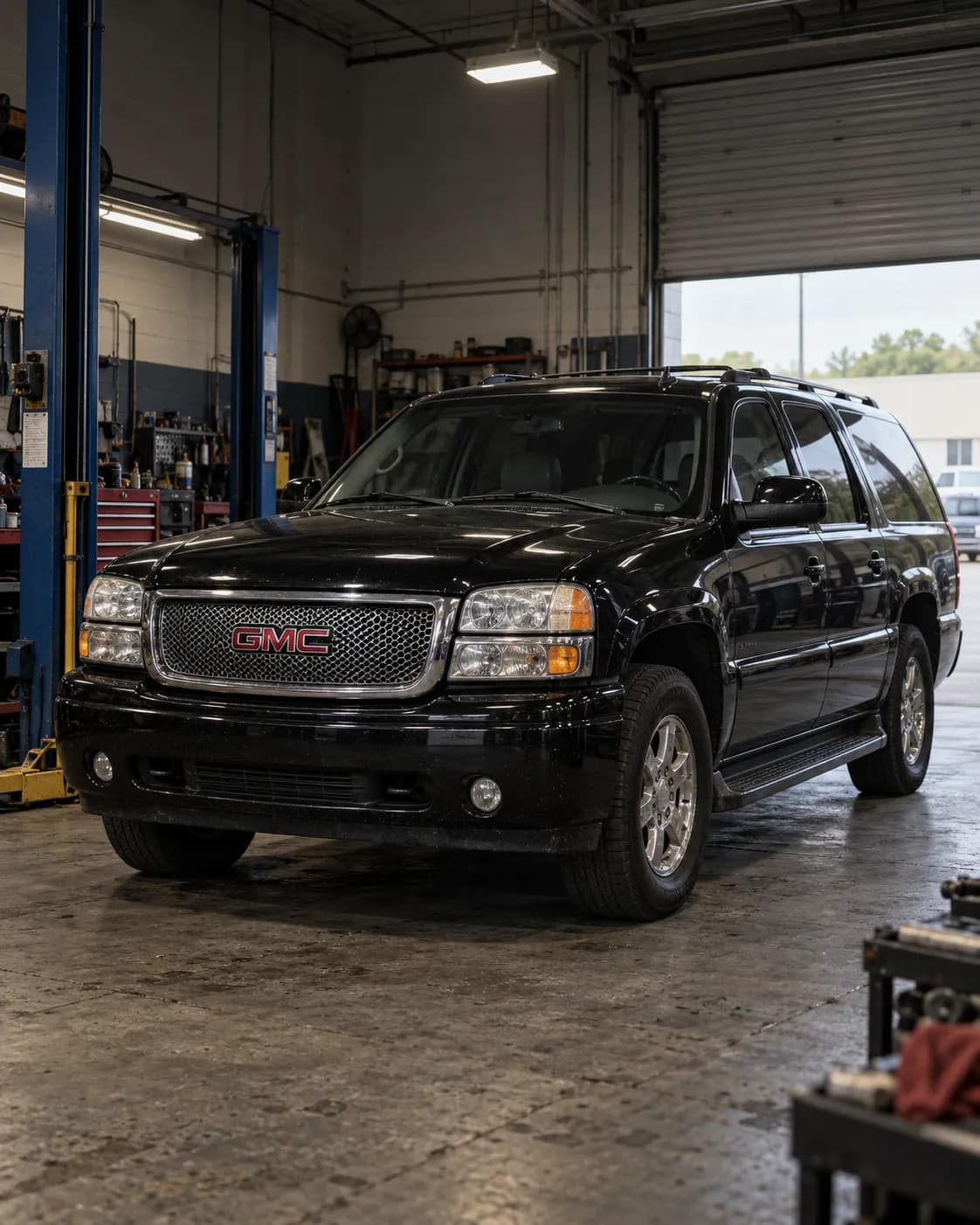
Source reference 10116874
Manufacturer communication — 2006 GMC YUKON DENALI XL
Relation to the target vehicle
- The source's vehicle field includes the trim.
- Model year
- Match 2006 — Source vehicle field
- Model
- Match YUKON DENALI XL — Source vehicle field
- Trim
- Match Denali — Source vehicle field
What the manufacturer’s document says
01-08-42-001K ・ normal characteristic (no repair) ・ for GM vehicles in general
Applies to
2017 and prior GM passenger cars and trucks.
the passage
Models: 2017 and Prior GM Passenger Cars and Trucks
Fault
Exterior lamps such as cornering, turn signal, backup, head or tail lamps may show very small water droplets, a fine mist or white fog (condensation) on the inside of the lens.
the passage
Some exterior lamps, such as cornering, turn signal, backup, headlamps or tail lamps may exhibit very small droplets of water, a fine mist or white fog (condensation) on the inside of the lamp lens.
Finding the cause
Possible causes
Condensation forms when the air inside the lamp reaches the dew point through atmospheric changes and its moisture condenses on the inside surface of the lens.
the passage
Condensation occurs when the air inside the lamp assembly, through atmospheric changes, reaches the “dew point.” When this takes place, the moisture in the air within the lamp assembly condenses, creating a fine mist or white fog on the inside surface of the lamp lens.
Non-OE lamps, apparently fitted during collision repair, are the ones most often brought in for holding moisture or for inoperative bulbs from corroded electrical connections.
the passage
These lamps are most often presented by customers as holding moisture or for inoperative bulbs due to corroded electrical connections. It appears these non OE lamps get installed on vehicles as part of a collision repair.
Steps to confirm (in the document’s order)
Normal condensation may sit mainly in the lens corners near the vents and should not cover more than half the lens surface.
the passage
May be located primarily in the lens corners (near the vents) and SHOULD NOT cover more than half the lens surface.
Normal condensation clears when the vehicle is parked in a dry environment or driven with the lights on.
the passage
The condition should clear of moisture when the vehicle is parked in a dry environment, or when the vehicle is driven with the lights ON.
A water leak shows as numerous drops of various sizes collecting on the inside of the lens after the vehicle has been in rain or a car wash.
the passage
Numerous & Various Size Drops of Water Collecting on the Inside Surface of the Lamp Lens After the Vehicle Has Been Exposed to Rain or a Car Washing Environment
The lens or lamp needs service if the condition does not clear when the vehicle is parked in a dry environment or driven with the lights on.
the passage
A condition that WON'T clear when the vehicle is parked in a dry environment, or when the vehicle is driven with the lights ON.
The most reliable way to identify a non-OE lamp is to compare it with the replacement service part or a like vehicle.
the passage
The most reliable way to identify a non OE part is to compare it to the replacement service part or a like vehicle.
Correction
Caution
Depending on the lamp's size, shape and location and on the weather, clearing the lamp may take from 2 to 6 hours.
the passage
Depending on the size, shape and location of the lamp on the vehicle, and the atmospheric conditions occurring, the amount of time required to clear the lamp may vary from 2 to 6 hours.
When these conditions are found, tell the customer that replacing the lamp assembly may not correct the condition.
the passage
If the above conditions are noted, the customer should be advised that replacement of a lamp assembly may not correct this condition.
Moisture that comes and goes is considered a normal condition.
the passage
The customer may comment that, or you may need to inquire if, the moisture “comes and goes.” Moisture “coming and going” is considered a normal condition.
Compiled by reading the full text of the document; each point stands on the passage shown. Check the document itself, linked below, before working on a vehicle.
Stated content
Communication summary
本情報提供文書は、外装ランプの結露および交換ガイドラインに関する情報を提供するものです。 Machine translation (unreviewed)
This informational bulletin provides information on exterior lamp condinsation and replacement guidelines
Go to this passage in the original
Source
- Source
- NHTSA Manufacturer Communications
- Source reference
- 10116874
- Received by source
- 2017-08-31
- Incident date
- Unknown
Open original text and sourceOpen the provider's page (external)