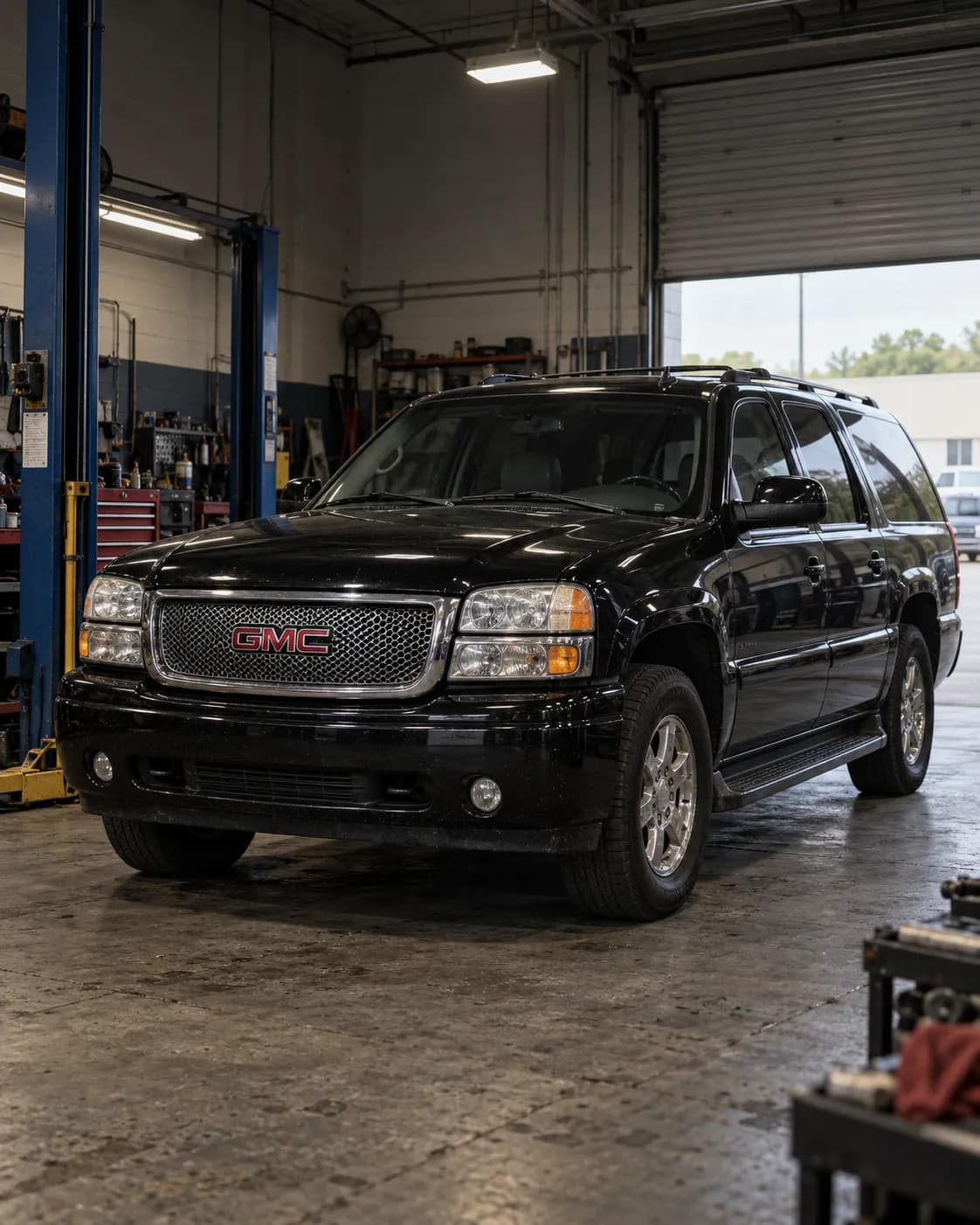
Source reference 10116914
Manufacturer communication — 2006 GMC YUKON DENALI XL
Relation to the target vehicle
- The source's vehicle field includes the trim.
- Model year
- Match 2006 — Source vehicle field
- Model
- Match YUKON DENALI XL — Source vehicle field
- Trim
- Match Denali — Source vehicle field
What the manufacturer’s document says
12-03-10-001C ・ fault and correction ・ for GM vehicles in general
Applies to
2017 and prior GM passenger cars and trucks.
the passage
Models: 2017 and Prior GM Passenger Cars and Trucks
Fault
A vibration shortly after tires are mounted may be caused by the tires slipping on the wheels, which moves the imbalance point of the tire away from the weight location.
the passage
A customer concern of vibration shortly after having a tire or tires mounted may be caused by slippage of the tires on the wheels, placing the imbalance point of the tire away from the weight location.
Finding the cause
Possible causes
Wheel slip normally occurs when an excessive amount of lubricant is used or the lubricant is applied in the wrong locations.
the passage
Wheel slip normally occurs for the following reasons: • Excessive amount of lubricant used or lubricant applied in the wrong locations.
Improper, non-preferred or improperly diluted lubricants may contain excessive moisture or components that do not dry sufficiently, leaving the tire-to-rim interface excessively slippery.
the passage
Improper lubricants, non-preferred lubricants or improperly diluted lubricants may contain excessive moisture or components that do not dry sufficiently, resulting in an interface between the tire and rim that is excessively slippery.
Steps to confirm (in the document’s order)
Wheel slip can be checked by placing a temporary mark on the tire at the valve stem.
the passage
Wheel slip can be checked by placing a temporary mark on the tire at the valve stem.
When the slip is greater than one inch and a ride disturbance was felt on the test drive, wheel slip may be causing the vibration.
the passage
When wheel slip is greater than one inch, and you felt a ride disturbance on the test drive, then wheel slip may be causing the vibration.
Correction
Repair
When lubricating the wheel, lubricate the safety humps, leave the rim flanges dry, and lubricate the drop center area only for difficult to mount tires.
the passage
When lubricating the wheel, lubricate the safety humps, leave the rim flanges dry and lubricate the drop center area only for difficult to mount tires.
The mounting process must be completed within 10 minutes of applying the mounting lubricant.
the passage
The mounting process must be completed within 10 minutes of the application of the mounting lubricant.
Inflate the tires to 275 kPa (40 psi) when mounting, then reduce the air pressure to the desired operating pressure.
the passage
Inflate the tires to 275 kPa (40 psi) when mounting, then reduce the air pressure to the desired operating pressure.
Caution
This diagnostic test is only effective if the vehicle has been serviced within the last couple of hours.
the passage
Note: This diagnostic test will only be effective if the vehicle has been serviced within the last couple of hours.
Do not use products containing silicone, alcohol, petroleum based products, solvents or corrosives for cleaning or lubrication.
the passage
Do not use products containing silicone, alcohol, petroleum based products, solvents or corrosives for cleaning or lubrication.
The vehicle should not be driven aggressively (hard acceleration or braking) for up to 24 hours after tire mounting, to allow the lubricant to dry.
the passage
Also, the vehicle should not be driven aggressively (hard acceleration or braking) for up to 24 hours after tire mounting to allow the lubricant to dry.
Compiled by reading the full text of the document; each point stands on the passage shown. Check the document itself, linked below, before working on a vehicle.
Stated content
Communication summary
本情報通知は、タイヤの装着およびバランス調整時に適用する適切な装着ペーストに関する情報を提供し、タイヤ装着直後の振動、およびホイールスリップ(ホイール上でのタイヤのすべり)からの振動発生を防止する条件について説明しています。 Machine translation (unreviewed)
This informational bulletin provides information on the proper mounting paste to apply to tires when mounting and balancing them to prevent conditions like Vibration Shortly After Tires are Mounted/Preventing Vibration from Wheel Slip (Tire Sliding on Wheel)
Go to this passage in the original
Source
- Source
- NHTSA Manufacturer Communications
- Source reference
- 10116914
- Received by source
- 2017-08-31
- Incident date
- Unknown
Open original text and sourceOpen the provider's page (external)