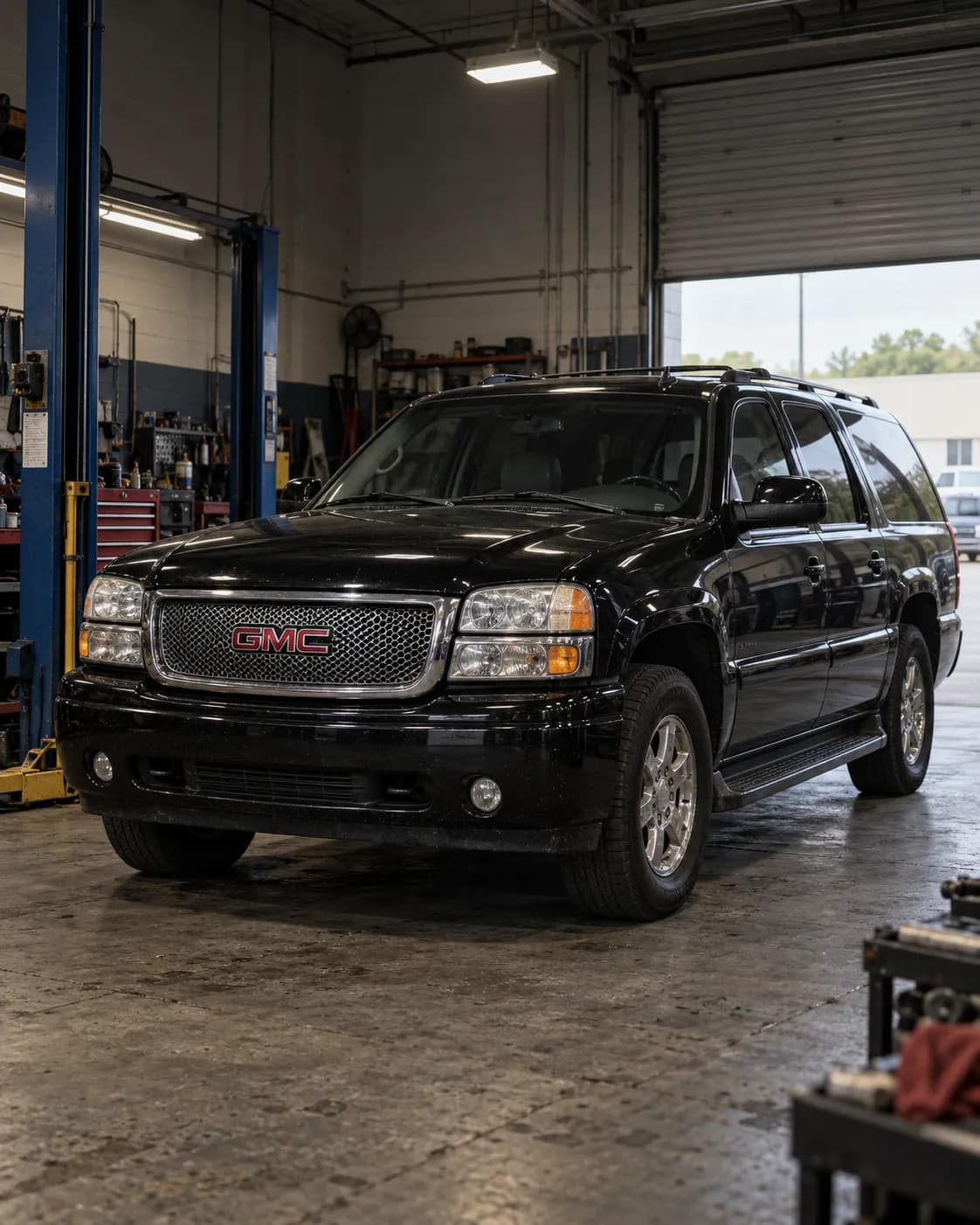
Source reference 10134736
Manufacturer communication — 2006 GMC YUKON DENALI XL
Relation to the target vehicle
- The source's vehicle field includes the trim.
- Model year
- Match 2006 — Source vehicle field
- Model
- Match YUKON DENALI XL — Source vehicle field
- Trim
- Match Denali — Source vehicle field
What the manufacturer’s document says
05-09-40-002G ・ normal characteristic (no repair) ・ for GM vehicles in general
Applies to
Applies to 2005-2014 GM passenger cars and light duty trucks.
the passage
2005-2014 GM Passenger Cars and Light Duty Trucks
Fault
Overspool lock: if the webbing snaps back to the stowed position rapidly enough, the retractor locks with the belt fully stowed.
the passage
If the webbing snaps back to the stowed position rapidly enough, the retractor will lock with the belt fully stowed.
Vehicle-sensing lock occurs when the vehicle changes speed or direction abruptly: rapid acceleration, rapid deceleration or aggressive cornering.
the passage
The vehicle changes speed or direction abruptly (the vehicle goes into rapid acceleration OR rapid deceleration or there is aggressive cornering).
It can also occur with the vehicle static, parked on a large slant, fore-aft or side-to-side.
the passage
It can also occur in a static condition when a vehicle is parked on a large slant (fore-aft or side-to-side), such as streets in San Francisco, California.
Web-sensing lock: when the webbing reels out at an accelerated rate it goes into lock mode and stays there until tension is released.
the passage
When the webbing reels out at an accelerated rate, it goes into lock mode and stays there until tension is again released.
Pulling the webbing all the way out automatically converts the retractor into a cinch-down mode (ALR), typically used to secure a child seat tightly.
the passage
When the webbing is pulled all the way out, it automatically converts the retractor into a cinch-down mode (i.e. ALR). This is typically used to tightly secure a child seat to the vehicle.
Finding the cause
Possible causes
With the webbing fully loaded on the spool the retractor cannot rewind further to release the locking mechanism, so the occupant cannot extract the belt.
the passage
Since the webbing is now fully loaded on the spool, the retractor cannot rewind itself further to release the locking mechanism. When this happens, the occupant cannot extract the belt to wear it.
Correction
Repair
Pull hard on the locked webbing and then release; the hard pull extracts a small amount of webbing, which permits a small amount of retraction when released.
the passage
Pull hard on the locked webbing and then release. The hard pull extracts a small amount of webbing from the retractor which, in turn, permits a small amount of retraction to occur when released.
The ALR mode is cancelled automatically when the belt is unfastened and stowed.
the passage
The ALR mode of operation is automatically cancelled when the belt is unfastened and stowed (the belt returns to normal sensitive function).
Caution
Do not replace the retractor for this condition before first trying to disengage the locking mechanism as recommended.
the passage
DO NOT replace the retractor for this condition until first attempting to disengage the locking mechanism by following the recommendation listed below.
A belt that the customer says locks intermittently in these conditions is working as designed and functioning properly.
the passage
Please inform customers that may comment that “the belt locks intermittently” that this is the design intent and the belt is functioning properly.
Compiled by reading the full text of the document; each point stands on the passage shown. Check the document itself, linked below, before working on a vehicle.
Stated content
Communication summary
本テクニカルブレティンは、05-09-40-002Fの改訂版であり、2013~2014年モデルを追加するものです。 Machine translation (unreviewed)
This technical bulletin provides a revision of 05-09-40-002F to add the 2013-2014 model years.
Go to this passage in the original
Source
- Source
- NHTSA Manufacturer Communications
- Source reference
- 10134736
- Received by source
- 2018-04-23
- Incident date
- Unknown
Open original text and sourceOpen the provider's page (external)