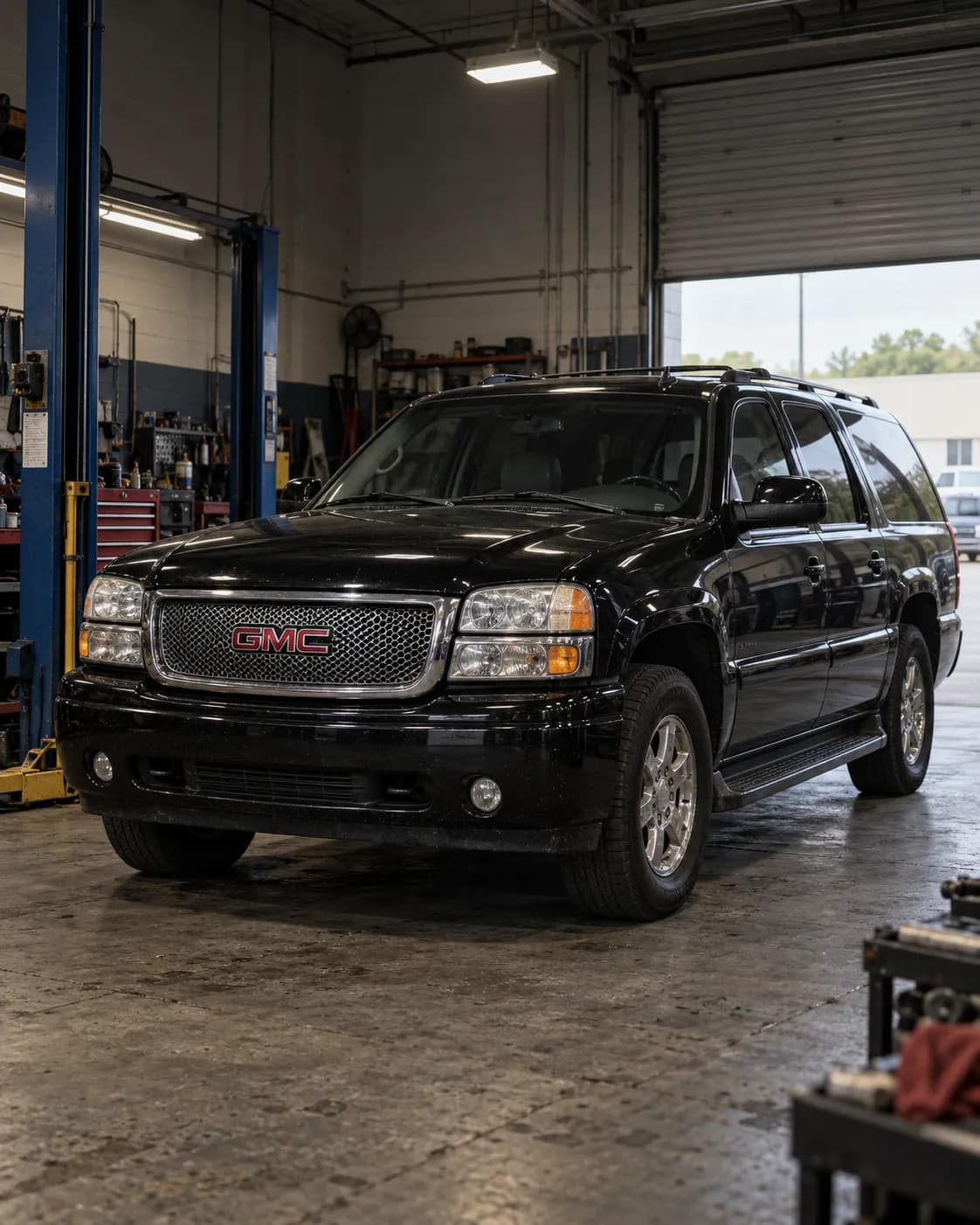
Source reference 10140437
Manufacturer communication — 2006 GMC YUKON DENALI XL
Relation to the target vehicle
- The source's vehicle field includes the trim.
- Model year
- Match 2006 — Source vehicle field
- Model
- Match YUKON DENALI XL — Source vehicle field
- Trim
- Match Denali — Source vehicle field
What the manufacturer’s document says
00-06-01-012E ・ information ・ for GM vehicles in general
Applies to
2015 and prior GM passenger cars and trucks.
the passage
2015 and Prior GM Passenger Cars and Trucks
Finding the cause
Possible causes
Abrasive pads produce fine grit that the oil filter cannot remove from the oil; this grit is abrasive and has been known to cause internal engine damage.
the passage
Abrasive pads will produce fine grit that the oil filter will not be able to remove from the oil. THIS GRIT IS ABRASIVE AND HAS BEEN KNOWN TO CAUSE INTERNAL ENGINE DAMAGE.
Abrasive pads can easily remove enough material to round cylinder head surfaces, which affects gasket sealing, especially in the narrow areas between combustion chambers and coolant jackets.
the passage
Abrasive pads can easily remove enough material to round cylinder head surfaces. This has been known to affect the gasket's ability to seal, especially in the narrow seal areas between the combustion chambers and coolant jackets.
An abrasive pad removes 0.203 mm (0.008 in) of metal in about 15 seconds.
the passage
It takes about 15 seconds to remove 0.203 mm (0.008 in) of metal with an abrasive pad.
Aluminum Oxide in the engine oil causes premature engine bearing failure, in some cases in as little as 2,200 km (1,367 mi) or less after the repair.
the passage
The presence of Aluminum Oxide in engine oil has been shown to cause premature engine bearing failure. In some cases, this failure occurs in as little as 2,200 km (1,367 mi) or less after the repair has been made.
Correction
Repair
GM recommends a razor blade or plastic gasket scraper to clean the gasket surface on engine components that are to be reused.
the passage
General Motors recommends the use of a razor blade or plastic gasket scraper to clean the gasket surface on engine components that are to be reused.
With a razor blade scraper, use a new blade for each cylinder head and corresponding block surface, and hold the blade as parallel to the gasket surface as possible.
the passage
When using a razor blade type gasket scraper, use a new razor blade for each cylinder head and corresponding block surface. Hold the blade as parallel to the gasket surface as possible.
Alternatively, spray GM Low VOC Cleaner, P/N 19287401 (in Canada, P/N 88901247), on the mating surface.
the passage
To properly clean the sealing surface prior to reassembly, GM Low VOC Cleaner, P/N 19287401 (in Canada, P/N 88901247), should be sprayed on the mating surface.
Let it soak for several minutes to loosen the old RTV sealer/gasket material, then remove the loose material with a plastic razor blade or non-metallic scraper.
the passage
Allow it to soak in for several minutes to loosen the old RTV sealer/gasket material. GM strongly recommends using a plastic razor blade or non- metallic scraper to remove all loose sealer/ gasket material.
Part numbers printed in the document
19287401Cleaner,Brake Parts (Low Voc 10%) Acdelco 15OzLook up at RockAuto (aftermarket candidates) ↗Search the web ↗
Replaced by: 19370705as stated by GMPartsGiant (checked 2026-10-06) ↗Look up at RockAuto (aftermarket candidates) ↗Search the web ↗
88901247Look up at RockAuto (aftermarket candidates) ↗Search the web ↗
The numbers are as the document prints them. The name and the replacing number are what the pages of GMPartsGiant, a reseller of genuine parts and not GM, state. Aftermarket equivalents are not checked here (the links only search by number). Confirm the fit for the vehicle (VIN) before ordering.
Caution
Do not use abrasive pad/bristle devices to clean the gasket surfaces of engine components.
the passage
Do not use abrasive pad/bristle devices to clean the gasket surfaces of engine components.
The appearance of the gasket surface is not critical, the feel is; indentations left by the old gasket in the cylinder head will be filled by the new gasket.
the passage
The appearance of the gasket surface is not critical — the feel is. There will be indentations from the gasket left in the cylinder head after all the gasket material is removed. The new gasket will fill these small indentations when it is installed.
Compiled by reading the full text of the document; each point stands on the passage shown. Check the document itself, linked below, before working on a vehicle.
Stated content
Communication summary
本情報ブリティンは、正しい工具を使用して金属表面を適切に清掃する方法に関する情報をテクニシャンに提供するものである。 Machine translation (unreviewed)
This information bulletin provides the technician the information on how to properly clean a metal surface using the correct tool.
Go to this passage in the original
Source
- Source
- NHTSA Manufacturer Communications
- Source reference
- 10140437
- Received by source
- 2018-06-11
- Incident date
- Unknown
Open original text and sourceOpen the provider's page (external)