Source reference 10213757
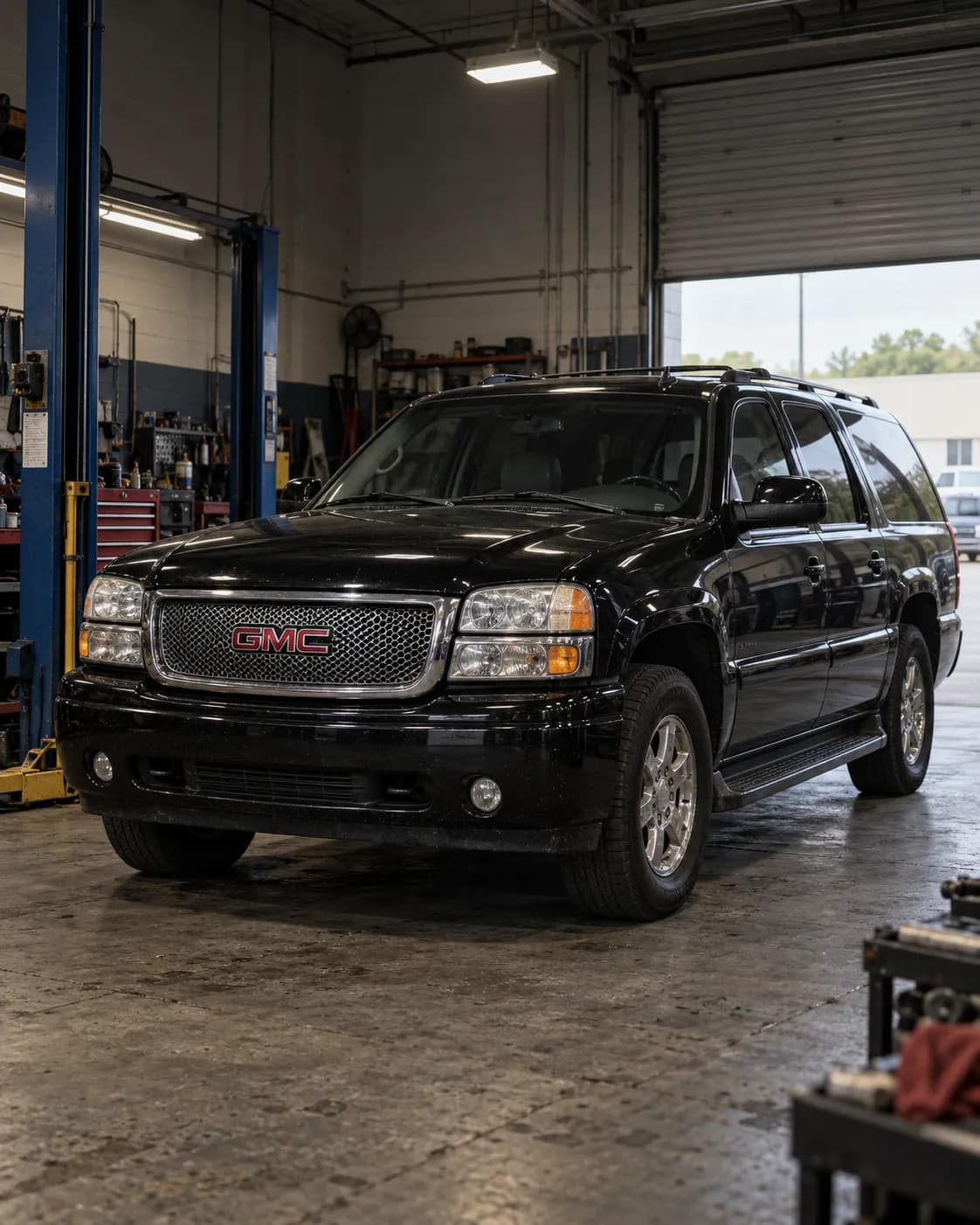
Manufacturer communication — 2006 GMC YUKON DENALI XL
Relation to the target vehicle
- The source's vehicle field includes the trim.
- Model year
- Match 2006 — Source vehicle field
- Model
- Match YUKON DENALI XL — Source vehicle field
- Trim
- Match Denali — Source vehicle field
What the manufacturer’s document says
00-00-90-002L ・ information ・ for GM vehicles in general
Applies to
Applies to 2022 and prior GM passenger cars and light duty trucks.
the passage
Passenger Cars and Light Duty Trucks 2022 and Prior
Fault
Ride, handling and road noise concerns may be caused by improperly adjusted tire pressure.
the passage
Ride, handling and road noise concerns may be caused by improperly adjusted tire pressure.
During cold weather the Tire Pressure Monitor (TPM) indicator (a yellow horseshoe with an exclamation point) may illuminate.
the passage
During cold weather, the Tire Pressure Monitor (TPM) indicator light (a yellow horseshoe with an exclamation point) may illuminate.
Finding the cause
Steps to confirm (in the document’s order)
The first step in diagnosing these concerns is to verify that the tires are inflated to the correct pressures.
the passage
The first step in the diagnosis of these concerns is to verify that the tires are inflated to the correct pressures.
The tire placard is on the driver's side front or rear door edge, the center pillar, or the rear compartment lid.
the passage
located on the driver's side front or rear door edge, center pillar, or the rear compartment lid.
Generally a 5.6°C (10°F) temperature change equals a 6.9 kPa (1 psi) tire pressure change.
the passage
Generally a 5.6°C (10°F) temperature change will result in (is equivalent to) a 6.9 kPa (1 psi) tire pressure change.
A "cold" tire is one that has sat for at least 3 hours or been driven no more than 1.6 km (1 mi).
the passage
The definition of a "cold" tire is one that has been sitting for at least 3 hours, or driven no more than 1.6 km (1 mi).
Correction
Repair
If the indicator goes off after the tires warm up, reset the pressure to placard pressure at the cold temperature.
the passage
turns off after the tires warm up (reach operating temperature), the tire pressure should be reset to placard pressure at the cold temperature.
Caution
The recommended inflation pressure is not the pressure printed on the tire sidewall.
the passage
Recommended inflation pressure is not the pressure printed on tire sidewall.
Always inspect and adjust the pressure when the tires are cold.
the passage
Always inspect and adjust the pressure when the tires are cold.
Vehicles with different front and rear pressures need to be adjusted after tire rotation.
the passage
Vehicles that have different pressures for the front and the rear need to be adjusted after tire rotation.
To prevent electrostatic discharge damage to the Tire Pressure Monitoring Sensor (TPMS), the technician should be statically discharged before checking or filling tires.
the passage
discharge damage to the Tire Pressure Monitoring Sensor (TPMS), the technician should be statically discharged before checking or filling tires.
Compiled by reading the full text of the document; each point stands on the passage shown. Check the document itself, linked below, before working on a vehicle.
Stated content
Communication summary
このサービスブレティンは、GM自動車およびトラックの安全なハンドリングと適切な乗り心地特性を確保するための正確なタイヤ空気圧に関する情報を提供しています。 Machine translation (unreviewed)
This service bulletin provides information for accurate tire pressures that ensure the safe handling and appropriate ride characteristics of GM cars and trucks.
Go to this passage in the original
Source
- Source
- NHTSA Manufacturer Communications
- Source reference
- 10213757
- Received by source
- 2022-06-13
- Incident date
- Unknown
Open original text and sourceOpen the provider's page (external)