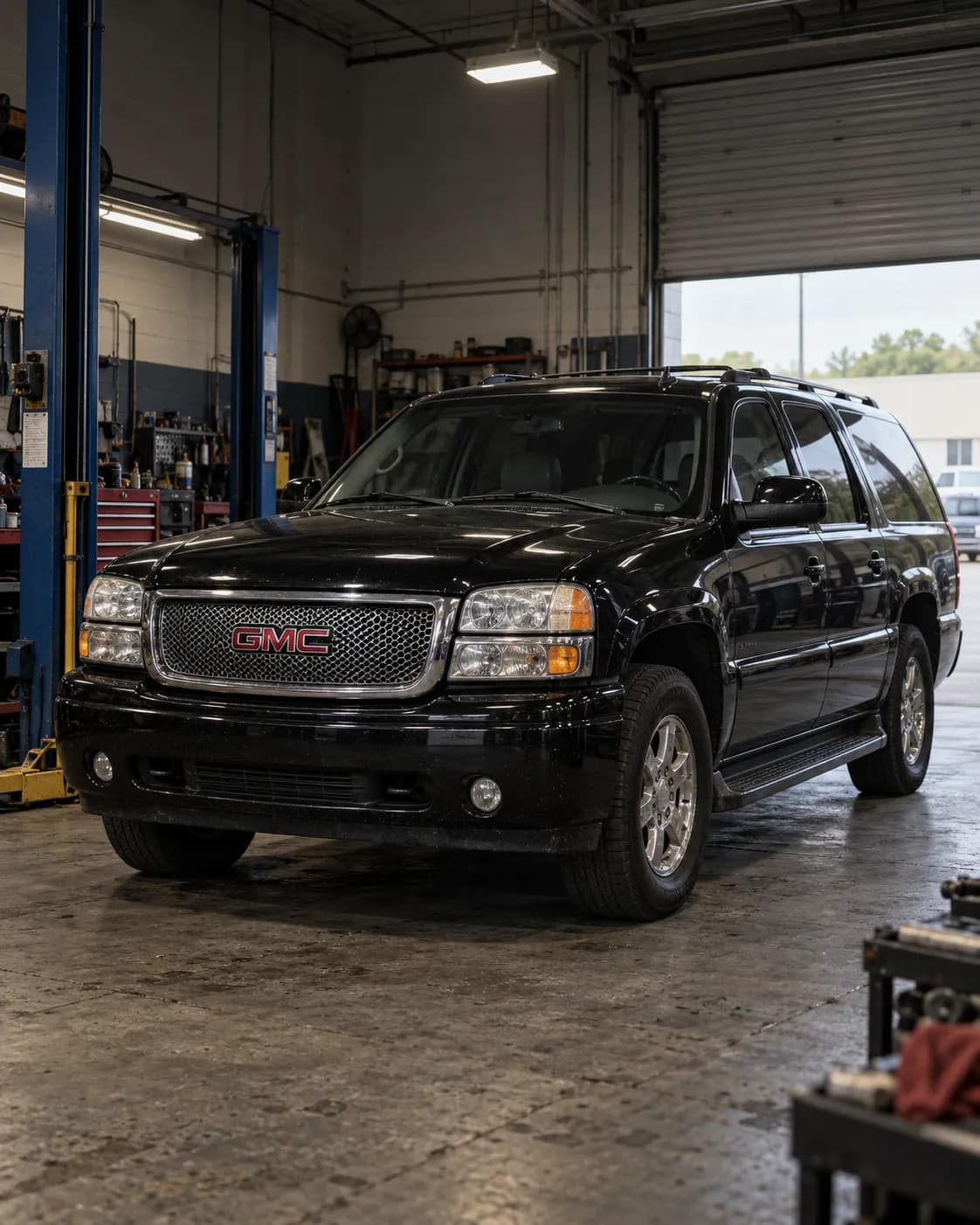
Source reference 10219266
Manufacturer communication — 2006 GMC YUKON DENALI XL
Relation to the target vehicle
- The source's vehicle field includes the trim.
- Model year
- Match 2006 — Source vehicle field
- Model
- Match YUKON DENALI XL — Source vehicle field
- Trim
- Match Denali — Source vehicle field
What the manufacturer’s document says
20-NA-065 ・ fault and correction ・ for GM vehicles in general
Applies to
Applies to Buick, Cadillac, Chevrolet and GMC passenger cars and trucks, model years 2000 to 2022, gasoline engines only.
the passage
Buick GM Passenger Cars and Trucks 2000 2022 — — Gasoline Engines Only — Cadillac Chevrolet GMC
Fault
Customers may comment that the MIL is illuminated.
the passage
Some customers may comment that the MIL is illuminated.
Initial diagnosis may show fuel trim and O2 sensor related codes including P0101, P0137, P0138, P0140, P0141, P0157, P0158, P0160 and P0161.
the passage
P0101 • P0137 • P0138 • P0140 • P0141 • P0157 • P0158 • P0160 • P0161
The listed codes also include P0171, P0174, P0420, P0430, P1174 and P1175.
the passage
P0171 • P0174 • P0420 • P0430 • P1174 • P1175
Finding the cause
Possible causes
These methods find small leaks around the O2 sensor embossments and slight cracks in an intake plenum or gasket.
the passage
These methods are very good for finding small leaks around the O2 sensor embossments and slight cracks in an intake plenum or gasket.
Steps to confirm (in the document’s order)
If normal SI diagnostics do not lead to a resolution and an intake vacuum leak or exhaust leak is suspected, use the GE-52250 Variable Pressure Leak Detector (preferred), the J-41416 ultrasonic leak tester, or possibly soapy water with low pressure air into the tailpipe to find the leak.
the passage
If normal SI diagnostics does not lead to a resolution and an intake vacuum leak or an exhaust leak is suspected, the GE-52250 Variable Pressure Leak Detector (preferred method), the J-41416 ultrasonic leak tester, or possibly using soapy water and low pressure air into the tailpipe, may be useful to find the leak.
For an intake leak, introduce the smoke into the brake booster hose or the oil dipstick tube; soapy water can be sprayed near the gasket, seams and all vacuum nipples.
the passage
For an intake leak, the smoke can be introduced into the brake booster hose or the oil dipstick tube. Soapy water can be sprayed near the gasket and seams and all vacuum nipples.
For an exhaust leak, put the hose with smoke or air into the tailpipe sealed with shop towels, then spray soapy water around seals, seams and bosses.
the passage
For an exhaust leak, the hose into the tailpipe with smoke or air sealed with shop towels proves to be effective. Then soapy water would be sprayed around seal, seams and bosses.
Correction
Parts
No parts are required for this repair.
the passage
No parts are required for this repair.
Caution
All of these tests are much more effective if the throttle body is covered or sealed.
the passage
Note: All of these tests are much more effective if the throttle body is covered/sealed.
Compiled by reading the full text of the document; each point stands on the passage shown. Check the document itself, linked below, before working on a vehicle.
Stated content
Communication summary
本通知は、エンジンチェックランプの点灯およびマルチプルフューエルトリムおよび/またはオキシジンセンサーコードが設定された状態を是正するために、インテークバキュームリークまたはエキゾーストリークを検出するための利用可能なツールに関する情報を提供します。 Machine translation (unreviewed)
This bulletin provides information on tools available to find an intake vacuum leak or exhaust leak to correct a condition of MIL Illuminated with Multiple Fuel Trim and/or Oxygen Sensor Codes Set.
Go to this passage in the original
Source
- Source
- NHTSA Manufacturer Communications
- Source reference
- 10219266
- Received by source
- 2022-09-07
- Incident date
- Unknown
Open original text and sourceOpen the provider's page (external)